
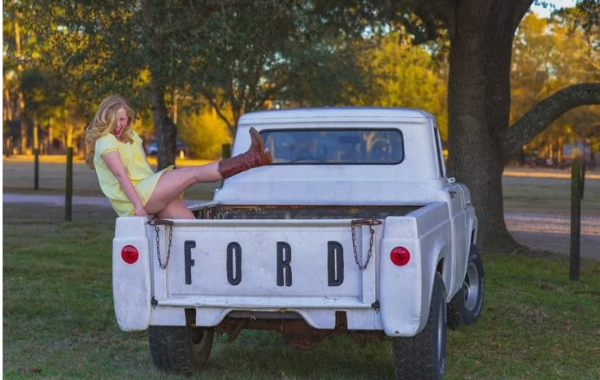
From Texas honky-tonks to Nashville recording studios, Celeste Marie Wilson is building a career on original songs, old-school musicianship, and a surprisingly practical understanding of the music business. Along the way, she’s discovered that sometimes the best recording sessions require a little whiskey, a bag of potato chips, and a healthy sense of humor.
There’s something refreshing about talking to an artist who understands that making music and building a career in music are two entirely different things.
One requires creativity, talent, and the willingness to put yourself out there.
The other requires planning, patience, paperwork, and occasionally remembering the last name of the person producing your record.
Celeste Marie Wilson has a pretty good handle on both.
The Texas country artist joined me for a conversation that wandered through honky-tonks, Nashville recording sessions, songwriting, artist branding, and the increasingly complicated business of getting music heard.
We also discussed Britney Spears, a rented minivan struggling through Yosemite, and the questionable nutritional benefits of eating potato chips for breakfast.
Just another perfectly normal conversation about country music.
But underneath the humor, Wilson revealed something I always appreciate in an artist: She pays attention to the details.
She knows how she wants her songs to sound. She understands the importance of working with talented musicians. She takes the time to prepare for recording sessions, credits the people who contribute to her projects, and recognizes that releasing an album is only the beginning of the work.
And perhaps most importantly, she’s willing to learn.
That might not sound particularly revolutionary, but after more than three decades in the music industry, I can tell you it’s a quality that separates artists who simply want to make records from those who are serious about building careers.
Wilson is clearly interested in the latter.
Texas Honky-Tonks and the Road Between Them
Growing up around country music in Texas gives an artist a certain advantage.
There are plenty of places to play.
And according to Wilson, practically every town seems to have a venue claiming some kind of historical significance.
She joked that with so many supposedly historic establishments scattered across Texas, somebody must be exaggerating.
She’s probably right.
But whether a particular honky-tonk has been around for a hundred years or simply looks like it has, the important thing is that it provides another stage.
Wilson has spent considerable time performing throughout Texas, balancing traditional honky-tonk appearances with songwriter rounds and smaller festivals.
She’s also looking to expand her festival schedule.
Most of those performances are solo.
In fact, she estimates that roughly 75 percent of her shows are acoustic performances without a full band.
When the venue has the budget, she’ll bring additional musicians.
But like many independent artists, she’s learned to adapt to the economics of live music.
A full band can deliver a bigger sound, but it also means additional expenses.
And those expenses don’t disappear simply because everybody enjoys playing together.
Wilson performs nearly every weekend, or every other weekend depending on the month, maintaining a schedule that takes her primarily through Texas and Nashville, with occasional appearances in Louisiana.
That last destination caught my attention.
Louisiana has an extraordinary musical history, but country music isn’t necessarily the first genre that comes to mind when somebody mentions New Orleans.
Wilson explained that her music contains elements of jazz, which helps it connect with Louisiana audiences.
She also understands that every room is different.
If a crowd isn’t responding to the more traditional country material, she adjusts the set.
That’s an important skill.
I’ve seen performers stubbornly push through a predetermined setlist while an audience gradually loses interest.
Wilson takes a different approach.
She reads the room.
And she gives people what they respond to without abandoning her identity as an artist.
She also appreciates the way audiences move between venues in New Orleans.
Unlike the more spread-out Texas honky-tonks, New Orleans has areas where music clubs sit practically next door to one another.
People wander from bar to bar, following whatever catches their attention.
That means a performance can begin with a small audience and end with a considerably larger one.
For an independent artist trying to introduce original music to new listeners, that’s a valuable opportunity.
Making Britney Spears Sound Country
Wilson estimates that about 80 percent of her live material consists of original songs.
The remaining 20 percent gives her an opportunity to have a little fun.
One of her favorite approaches is taking a song that isn’t country and rearranging it into something that sounds like it belongs in a honky-tonk.
Her example?
Britney Spears’ “…Baby One More Time.”
Yes, that Britney Spears.
Wilson slows the song down, changes the feel, and turns it into a country performance.
And apparently, audiences love it.
The idea is actually pretty clever.
People already know the lyrics.
They recognize the melody.
But because the arrangement is so different from the original recording, they’re not sitting there comparing Wilson’s performance directly to Spears’.
They’re hearing the song from a different perspective.
That’s the beauty of a good arrangement.
A song doesn’t necessarily belong to the genre in which it was originally recorded.
The underlying melody and lyrics can often survive an entirely different musical treatment.
Sometimes they even reveal something that wasn’t obvious in the original.
During our conversation, we discovered that Wilson and Spears have birthdays one day apart.
Wilson was born on December 1, while Spears celebrates hers on December 2.
I also learned that Wilson was born in 2003.
Which means she was too young to experience much of Spears’ early career firsthand.
That made me feel appropriately ancient.
But it also illustrates something interesting about Wilson’s musical approach.
She’s comfortable drawing from music outside her own generation and genre.
And she understands how to make those influences work within her own sound.
Nashville: Where Everybody Is a Songwriter
Although Texas remains her home base, Nashville plays an important role in Wilson’s career.
She frequently participates in songwriter rounds at venues such as The Local and The Listening Room.
For her, those performances are about more than getting onstage.
They’re opportunities to meet other writers.
Wilson lives in Montgomery, Texas, where the songwriting community isn’t nearly as concentrated as it is in Nashville.
In Music City, she can walk into a room filled with people who spend their days writing songs.
And she makes a point of learning from them.
One encounter in particular changed the way she approaches songwriting.
During a writer’s round, she met a songwriter who maintained an extensive collection of short phrases in his phone.
Not complete lyrics.
Not elaborate stories.
Just interesting observations, clever lines, and things he’d heard people say.
Wilson already kept a daily journal, writing approximately a page each day and occasionally pulling song ideas from those entries.
But the idea of maintaining a separate collection of potential hooks immediately appealed to her.
It was simple.
Practical.
And something she could use whenever inspiration wasn’t cooperating.
She adopted the practice almost immediately.
That’s one of the things I appreciate about her attitude.
She doesn’t seem particularly concerned with pretending she’s already figured everything out.
If somebody has a good idea, she’s willing to learn from it.
And in Nashville, where songwriting is practically a competitive sport, that openness can be invaluable.
The Art of Writing Without Inspiration
Wilson began writing poetry before developing her songwriting skills.
As a result, many of her songs begin with lyrics.
But not all of them.
Sometimes a melody comes first.
Sometimes she’ll sit at a piano and work through a musical idea.
And recently, she’s even started dreaming complete songs.
She’ll wake up with a melody or an entire composition still in her head.
Every songwriter wishes that would happen more often.
Unfortunately, inspiration doesn’t usually operate on a convenient schedule.
Which is why Wilson believes it’s important to develop the ability to write even when you’re not feeling particularly inspired.
She calls it learning to write without inspiration.
And she’s right.
Professional songwriting often involves scheduled sessions.
You might have a co-writing appointment at eleven in the morning.
You sit down with two other writers.
Everybody exchanges ideas.
And somehow, you’re expected to produce something worthwhile before lunch.
That’s not always how creativity naturally works.
But it’s how much of the business operates.
Wilson understands that waiting for the perfect emotional moment isn’t a sustainable strategy.
She wants to be able to sit down, approach a subject, and build a song through craft rather than relying entirely on inspiration.
One exercise she’s considering involves asking friends and family to write seemingly impossible song subjects on note cards.
Then she’ll attempt to write songs about them.
Some might turn out well.
Others might be terrible.
She’s comfortable with either outcome.
Because the exercise isn’t necessarily about creating a hit.
It’s about becoming a better writer.
I shared a similar experience from my own songwriting.
Sometimes somebody gives me an unusual idea, and the challenge of making it work produces something I wouldn’t have written otherwise.
Wilson understands that process.
She knows creativity can be developed through repetition, experimentation, and occasionally forcing yourself outside your comfort zone.
That’s a mature perspective for a relatively young songwriter.
From Piano Keys to Guitar Strings
Wilson began playing piano before learning guitar.
She’s only been playing guitar for a few years, but she started writing songs on the instrument almost immediately.
Her reasoning was straightforward.
If she was going to learn to play guitar, she might as well learn to write with it.
Today, she uses both instruments.
When she has a melody in her head but hasn’t worked out the chords, she often turns to the piano.
The keyboard makes it easier to identify notes, establish harmonic relationships, and experiment with progressions.
But many of her recent songs have been written on guitar.
Once she has the basic structure, she begins refining it.
And this is where her process becomes particularly interesting.
Wilson records herself performing the song on her phone.
Then she listens back.
She pays attention to the rhythm, the melody, and any sections that don’t quite work.
She plays the song again.
Records it again.
And repeats the process until she’s satisfied.
She describes it as playing the song until she discovers every hole in it.
It’s a practical approach.
When you’re performing, your attention is divided between playing the instrument, remembering the lyrics, maintaining the melody, and keeping everything moving.
Listening to a recording allows you to hear the performance more objectively.
You might discover that a chord change feels awkward.
Or that a phrase doesn’t sit naturally against the rhythm.
Or that the melody needs a little more space.
Wilson is particularly concerned with getting the melody and rhythmic feel right.
She knows the arrangement can evolve in the studio.
A transitional chord can be added.
A key can be adjusted.
But the foundation needs to work before she brings other musicians into the process.
And she doesn’t leave those musicians guessing.
The Google Document That Makes Nashville Sessions Work
One of my favorite revelations during our conversation was Wilson’s preparation for recording sessions.
Before entering the studio, she creates a detailed Google document for each song.
It includes the key.
The tempo.
The chord progression using the Nashville Number System.
And reference recordings that communicate the sound and atmosphere she’s trying to achieve.
She sends those materials to the producer and musicians approximately a week before recording.
That’s music to an engineer’s ears.
Literally.
I’ve worked with artists who walk into a recording session with a vague description of what they want.
They might say they want something that sounds big.
Or emotional.
Or radio-ready.
Those descriptions aren’t particularly useful when you’re trying to determine an arrangement, instrument selection, or production direction.
Wilson understands that musicians need something more concrete.
She provides reference songs not because she wants to copy another artist, but because she wants to communicate a feeling.
A particular guitar tone.
A rhythmic approach.
An overall production style.
Something that gives the musicians a starting point.
And she leaves room for them to contribute their own ideas.
That’s the right balance.
A producer needs to understand the artist’s vision.
But the artist also needs to trust the people hired to help bring that vision to life.
Wilson seems comfortable with both sides of that relationship.
Two Producers, Two Approaches
Wilson divides her recording work between Texas and Nashville.
In Texas, she works with producer Josh David Walker.
Walker handles many of her acoustic recordings and projects that require a relatively quick turnaround.
The two work from his studio, which is approximately thirty minutes from her home.
The process is straightforward.
Wilson brings her guitar.
They record the instruments one at a time.
Walker contributes guitar, bass, and piano.
If a song needs drums, they can send the recording to a drummer for additional parts.
Until then, they work with a click track.
It’s efficient.
It’s flexible.
And it allows Wilson to complete smaller projects without assembling an entire recording team.
At the time of our conversation, they had been working on a Christmas EP scheduled for November 6.
Wilson admitted that the project came together quickly because she realized she needed a Christmas release.
Sometimes the most sophisticated production strategy is simply recognizing that the calendar is moving faster than you are.
Her larger projects follow a different process.
For those, Wilson travels to Nashville and works with producer Jim Riley.
Rather than building every song one instrument at a time, Riley assembles a group of session musicians.
They record the basic tracks together.
And according to Wilson, the instrumental recording for an entire album can be completed in approximately two days.
That might sound impossible to somebody unfamiliar with Nashville recording sessions.
But I’ve spent enough time around those musicians to know what they’re capable of.
The level of preparation and musicianship in Nashville is extraordinary.
These are players who can hear a song, read a number chart, understand the arrangement, and deliver a professional performance with remarkable speed.
Wilson recognizes that.
And she’s willing to invest in those musicians.
In fact, she told me she’d rather spend more money hiring excellent players than pay extra to record in a famous studio.
That’s a philosophy I can appreciate.
A legendary recording room can be wonderful.
But the name on the building doesn’t play the instruments.
The musicians do.
Two Days in Nashville
Wilson’s Nashville sessions begin in the morning.
Or at least they begin whenever she manages to navigate Nashville traffic.
She joked that she wasn’t sure whether Houston’s traffic had followed her to Tennessee.
And after years of living and working in Nashville, I understood exactly what she meant.
The city has grown dramatically.
Roads change names.
Intersections seem to have been designed by people who had never actually driven through them.
And what should be a short trip can become an unexpected sightseeing tour.
Once Wilson reaches the studio, the process moves quickly.
Riley assembles the musicians.
Among the players Wilson mentioned were Cody on electric guitar and lap steel, Sam on drums, and Noah on keyboards.
Riley also contributes bass.
Wilson herself played rhythm guitar throughout her first album.
That’s worth mentioning because it’s not always the case with Nashville recordings.
Many singers who are perfectly capable instrumentalists step aside and allow the session musicians to handle the tracks.
There’s nothing wrong with that.
Those players are hired for their speed, consistency, and ability to contribute arrangements.
But Wilson wanted to be part of the instrumental performance.
And she was.
During the sessions, the musicians typically record several songs in a day.
Wilson sings scratch vocals while the band performs.
They capture two or three takes of the basic tracks.
Then, after the musicians leave, she stays behind to record her final vocals.
If they complete four songs that day, she may record four lead vocals that evening.
It’s a demanding schedule.
But Wilson says the workload generally doesn’t bother her.
She hasn’t experienced significant problems from singing too much.
Getting sick, however, is another story.
And that’s where one of the more entertaining parts of our conversation began.
Whiskey, Potato Chips, and a Recording Session from Hell
Shortly before recording her second album in Nashville, Wilson became seriously ill.
She’d been traveling through Missouri, including an interview at a college in Joplin.
Somewhere along the way, she picked up an illness that left her with a fever, exhaustion, and almost no voice.
Not exactly ideal preparation for recording an album.
To make matters worse, she had a live performance scheduled before the studio sessions.
Canceling wasn’t something she wanted to do.
So she improvised.
Wilson found herself in an alley behind the venue, gargling whiskey in an attempt to get her voice functioning well enough to perform.
She joked that it was the moment she finally felt like a real country singer.
Nothing says Nashville quite like standing in an alley with whiskey while wondering whether you’ll be able to sing the next thirty minutes.
Somehow, she made it through the show.
But the album sessions were still ahead.
And her voice hadn’t completely recovered.
She contacted her vocal coach looking for advice.
The response wasn’t particularly reassuring.
So Wilson developed her own plan.
First, she used steam from hot showers and eucalyptus shower steamers.
Then producer Jim Riley offered another suggestion.
Potato chips.
Lots of potato chips.
Wilson stopped at a Piggly Wiggly on the way to the studio and purchased a family-sized bag.
She spent the day eating chips and drinking hot black coffee.
It wasn’t exactly the nutritional plan you’d expect from a professional vocalist.
And I wouldn’t recommend it as a substitute for proper vocal care.
But Wilson insists it worked for her.
She managed to record the tracks.
And when I asked whether those performances were usable, she confirmed that they were all keepers.
By the second day, she was feeling even better.
The sessions were completed.
The album was recorded.
And somewhere in Nashville, a bag of potato chips had apparently earned an honorary production credit.
We joked about the balancing act between coffee and chips.
But beneath the humor was a familiar reality.
Recording sessions involve schedules, budgets, and musicians who have other commitments.
Moving an entire session at the last minute isn’t always practical.
Wilson understood the pressure.
And she found a way to finish the project.
It wasn’t glamorous.
But the music business rarely is.
When Too Many Harmonies Turn Everything Brown
One of the more thoughtful discussions during our interview involved background vocals.
Wilson doesn’t automatically add harmonies to every recording.
In fact, she deliberately avoided them on much of her second album.
Not because she was sick.
And not because she couldn’t sing them.
She simply didn’t believe the songs needed them.
Her explanation came from an unexpected place.
Watercolor painting.
Before pursuing music professionally, Wilson studied art at the Glassell School of Art in Houston, with an interest in illustrating children’s books.
One of her teachers explained that adding too many colors to a watercolor painting can eventually turn everything into a muddy brown.
Wilson applies the same philosophy to music.
Every additional instrument, harmony, or production element introduces another color.
Sometimes that color improves the arrangement.
Other times, it simply makes everything less distinct.
And when you’re recording an album quickly, there isn’t always enough time to experiment with every possibility.
Wilson would rather leave a song relatively simple than add something that doesn’t serve it.
That’s a surprisingly sophisticated production philosophy.
One of the hardest lessons for young artists and producers is understanding that more isn’t necessarily better.
Just because you can add another guitar doesn’t mean you should.
Just because you can stack six harmony parts doesn’t mean the chorus needs them.
Sometimes the strongest arrangement is the one that leaves enough room for the song to breathe.
Wilson’s Christmas recordings, produced in a more relaxed environment with Walker, gave her additional time to experiment with harmonies.
But on her Nashville album, she chose restraint.
And I respect that.
Because knowing when not to add something is just as important as knowing how to add it.
The Mix Has to Work Everywhere
Once the recording sessions are complete, Wilson returns to Texas.
The producer handles the mixing process and sends her the results.
Then she listens.
And she doesn’t limit that listening to one environment.
She checks the mixes in her car.
On headphones.
Through speakers.
And on her phone.
That’s exactly the kind of practical listening process I encourage.
A mix that sounds fantastic in a professionally treated control room doesn’t necessarily translate perfectly to everyday listening environments.
Most people aren’t hearing music through expensive studio monitors.
They’re listening in cars.
Through earbuds.
On phones.
And through whatever speakers happen to be available.
Wilson wants to know how her music performs in those situations.
If something bothers her, she’ll ask about it.
Maybe a guitar part doesn’t sound quite right.
Maybe another take would work better.
The producer can review the available performances and make adjustments.
Once she’s satisfied, the recordings move to mastering.
Then comes another substantial phase of work.
Artwork.
Packaging.
Promotion.
Distribution.
And all the details that turn a finished recording into an actual release.
Wilson understands that completing the music doesn’t mean the project is finished.
In many ways, it’s just getting started.
The Family Business
Wilson has assembled an impressive creative team.
And some of its most important members share her last name.
Her younger sister is a photographer attending Emerson College in Boston.
She photographs Wilson’s promotional images and album covers while also pursuing photography work in Boston’s punk scene.
That immediately caught my attention.
I’m originally from Boston, and I’ve spent plenty of time around the city’s music community.
I also taught at Emerson.
So we had a few things to talk about beyond country music.
Wilson’s sister has been photographing live performances, including punk shows, while developing her own creative career.
Meanwhile, Wilson’s father handles much of the graphic design for her album and EP packaging.
Which means the family has managed to cover photography, design, and music without having to look particularly far for collaborators.
Wilson joked that she’s forcing everybody to work for her.
But she was quick to acknowledge how fortunate she feels.
Having people who understand your personality, care about your success, and possess professional creative skills is an enormous advantage.
And the results are visible in her branding.
Not every design comes from the family.
Wilson also worked with a Dallas-based company that creates merchandise and designs for fraternities and sororities.
She wanted a logo that resembled a neon sign hanging in a bar.
Her reasoning was simple.
The visual identity she wanted wasn’t all that different from the bold, recognizable branding used by sororities.
So why not work with people who already understood that aesthetic?
It’s another example of Wilson thinking practically.
Rather than approaching every creative challenge through traditional music-industry channels, she looks for people who can deliver the result she wants.
Bringing Back the Album Experience
Wilson releases physical CDs.
And that made me happy.
Not because I’m opposed to streaming.
But because there’s something about holding an album in your hands that digital platforms haven’t quite replaced.
Wilson’s first album was released in jewel-case packaging with detailed credits.
The booklet identifies the musicians.
The producers.
The engineers.
The people responsible for mixing and mastering.
The photographer.
And the other contributors who helped create the project.
She considers that important.
So do I.
When I was growing up, album credits were part of the experience.
You’d buy a record, open the packaging, read the liner notes, and discover who played on your favorite songs.
Sometimes those credits would lead you to other artists.
You’d recognize a musician’s name.
Or a producer.
Or a recording studio.
And suddenly, you had an entirely new musical connection to explore.
That information helped build an understanding of how records were made.
Today, much of that experience has been lost.
Streaming platforms make music incredibly accessible, but they don’t always make the people behind the recordings equally visible.
Wilson wants those people recognized.
And she also appreciates the experience of listening to an album in its intended order.
That’s another aspect of recorded music that has changed.
Albums were often sequenced deliberately.
Songs were arranged to create emotional movement, musical contrast, or a broader narrative.
Mastering engineers paid attention to how one track flowed into the next.
But when listeners shuffle individual songs or jump between playlists, that larger experience can disappear.
Wilson understands that.
And she’s making an effort to preserve some of the traditions that helped shape the music industry.
For somebody born in 2003, that’s encouraging.
Building a Brand Without Losing Yourself
One of the biggest developments in Wilson’s career came when she signed a distribution agreement with Select-O-Hits.
The relationship gave her access to additional guidance about branding and artist development.
And she quickly realized something important.
She had been releasing music without a clearly defined identity.
She had songs.
She had outfits she liked.
She had recordings.
But she hadn’t necessarily thought about how those elements fit together into a recognizable brand.
That changed.
Wilson went through a significant rebranding process.
She even removed some previously released material that no longer fit the direction she wanted to pursue.
At one point, she’d completed a thirteen-song album before signing the distribution agreement.
After receiving guidance, she reconsidered how that material aligned with her evolving identity.
Some songs remained available.
Others didn’t.
That’s not always an easy decision.
Artists become attached to their work.
Every song represents time, effort, and personal investment.
But Wilson recognized that building a coherent catalog sometimes requires difficult choices.
She also understood the importance of establishing her identity before investing heavily in public relations.
A PR team can generate attention.
But attention isn’t particularly useful if the artist hasn’t figured out what they’re trying to communicate.
Wilson wanted to make sure the foundation was in place first.
And rather than inventing an entirely artificial personality, she built the brand around qualities that already existed.
She simply made them more visible.
A little louder.
A little more consistent.
And easier for audiences to recognize.
That’s how effective artist branding should work.
It should amplify who somebody already is.
Not replace them with a marketing department’s idea of who they ought to be.
Social Media, Radio, and the Rule of Three
Wilson has a playful approach to social media.
She enjoys making humorous videos, performing skits, and creating content that audiences can relate to.
But she doesn’t believe social media should be the only part of her promotional strategy.
Instead, she combines it with radio promotion and other forms of exposure.
Her philosophy is that people often need to encounter an artist several times before becoming interested enough to follow them.
They might see a social media post.
Then hear a song on the radio.
Then encounter another piece of content.
Eventually, the name becomes familiar.
And that familiarity can turn into curiosity.
It’s a practical understanding of marketing.
People rarely become devoted fans because they saw one advertisement.
Relationships with artists develop through repeated experiences.
Wilson also happens to enjoy listening to traditional radio.
She likes the fact that somebody else chooses the music.
There’s no need to build a playlist.
No need to scroll endlessly through options.
And no need to worry about whether the internet connection is working.
Sometimes she simply turns on the radio and listens.
It’s an old-fashioned habit.
But it fits an artist who still values physical albums and detailed liner notes.
Wilson isn’t rejecting modern technology.
She’s simply unwilling to assume that newer automatically means better.
And that perspective carries over into the business side of her career.
The Team Behind the Music
Wilson’s professional network has grown considerably.
Through Select-O-Hits, she connected with Scott Sexton of Sexton Entertainment.
That relationship helped expand her team and introduced her to additional people in the industry.
Wilson described the process as a series of personal recommendations.
One person knows somebody.
That person introduces you to somebody else.
And before long, you’ve assembled a group of professionals who can help move your career forward.
That’s Nashville.
For all its growth, the music business still operates through relationships.
Reputation matters.
Trust matters.
And knowing somebody who knows somebody can open doors that would otherwise remain closed.
Wilson appreciates that.
She spoke warmly about Sexton and the people who’ve helped her develop her career.
But she also understands that having a team doesn’t eliminate her responsibilities.
She’s still involved in the decisions.
Still learning.
Still paying attention to the details.
And still trying to understand the business she’s building.
That’s particularly important for independent artists.
Because even when you have professional support, you’re ultimately responsible for the direction of your career.
Wilson seems to understand that better than many artists twice her age.
Unsung Heroes: Barry Coffing and the Business Behind the Songs
Near the end of our conversation, we reached one of my favorite parts of every interview.
Unsung Heroes.
It’s an opportunity to recognize somebody whose contributions might not be obvious to the audience.
Somebody who helped an artist along the way.
And Wilson didn’t hesitate.
She wanted to recognize Barry Coffing.
Coffing works in music synchronization and runs an educational program for independent artists called Springboard.
The program helps musicians understand the business side of their careers.
Publishing.
Song registration.
Synchronization licensing.
Streaming.
And the administrative responsibilities that don’t always receive much attention when somebody dreams about becoming a recording artist.
Wilson met Coffing within the first few months of beginning her professional journey.
And she considers that timing incredibly fortunate.
Without his guidance, she believes she would have made significant mistakes.
Some of her early BMI information had already been entered incorrectly.
She didn’t fully understand the importance of establishing her own publishing company.
And she was still learning how the various parts of the music business fit together.
Coffing helped her navigate those challenges.
That’s the kind of contribution that can change an artist’s career.
Not through a hit song.
Not through a major performance.
But by helping somebody understand how to protect and manage the work they’re creating.
I’ve seen talented musicians lose opportunities because they didn’t understand publishing.
I’ve seen artists struggle with ownership questions, incomplete documentation, and administrative problems that could have been avoided with the right guidance.
Those details aren’t particularly glamorous.
But they’re essential.
Wilson recognized that early.
And she wanted to make sure Coffing received credit for helping her establish a stronger foundation.
It’s a fitting choice for an Unsung Hero.
Because sometimes the most important person in an artist’s career isn’t the one standing beside them onstage.
It’s the one making sure they understand what happens after the song is written.
A Career Built One Song at a Time
What impressed me most about Celeste Marie Wilson wasn’t any single accomplishment.
It was the way she approaches the entire process.
She writes her songs.
She rehearses them until the arrangements feel right.
She prepares detailed information for her musicians.
She works with producers who understand the needs of different projects.
She values the musicians playing on her recordings.
She listens critically to the mixes.
She credits the people involved.
And she takes the business side seriously enough to ask questions and learn from people who know more than she does.
That’s a pretty solid foundation.
And she’s building it while maintaining a regular live-performance schedule, traveling between Texas and Nashville, developing her catalog, and learning how to reach new audiences.
She also seems to understand something that gets lost in the constant conversation about streaming numbers and social media algorithms.
Music is still about connecting with people.
Whether she’s performing an original song in a Texas honky-tonk, rearranging Britney Spears for a Louisiana audience, or sharing the stage with other writers in Nashville, Wilson is looking for that connection.
And she’s willing to adapt her approach without losing sight of what she wants to accomplish.
There’s still plenty of work ahead.
More songs to write.
More records to make.
More venues to play.
And hopefully, a future appearance at Billy Bob’s Texas.
She hasn’t played there yet, although she has performed at some of the surrounding establishments.
I told her about my own experience working at Billy Bob’s while on the road with Steve Holy and engineer Matt McClure.
It’s a remarkable venue.
And I suspect Wilson would feel right at home there.
But whether that opportunity comes next year or farther down the road, she’s already doing the things that matter.
She’s learning her craft.
Building relationships.
Developing her sound.
And treating music like both an art and a profession.
Which brings me back to something she said about songwriting.
You have to learn how to write even when inspiration isn’t there.
That’s true of more than songwriting.
You have to keep working when the audience is small.
When the schedule is difficult.
When the recording session doesn’t go as planned.
And when you’re standing in a Nashville grocery store trying to decide whether a family-sized bag of potato chips is a reasonable substitute for vocal preparation.
Preferably, you won’t have to make that last decision very often.
But if you do, Celeste Marie Wilson has apparently conducted the research.
And according to her, the results are already on the record.
For Celeste Marie Wilson, country music isn’t simply about where she comes from. It’s about the stories she writes, the people she works with, and the career she’s determined to build—one song, one stage, and one recording session at a time.