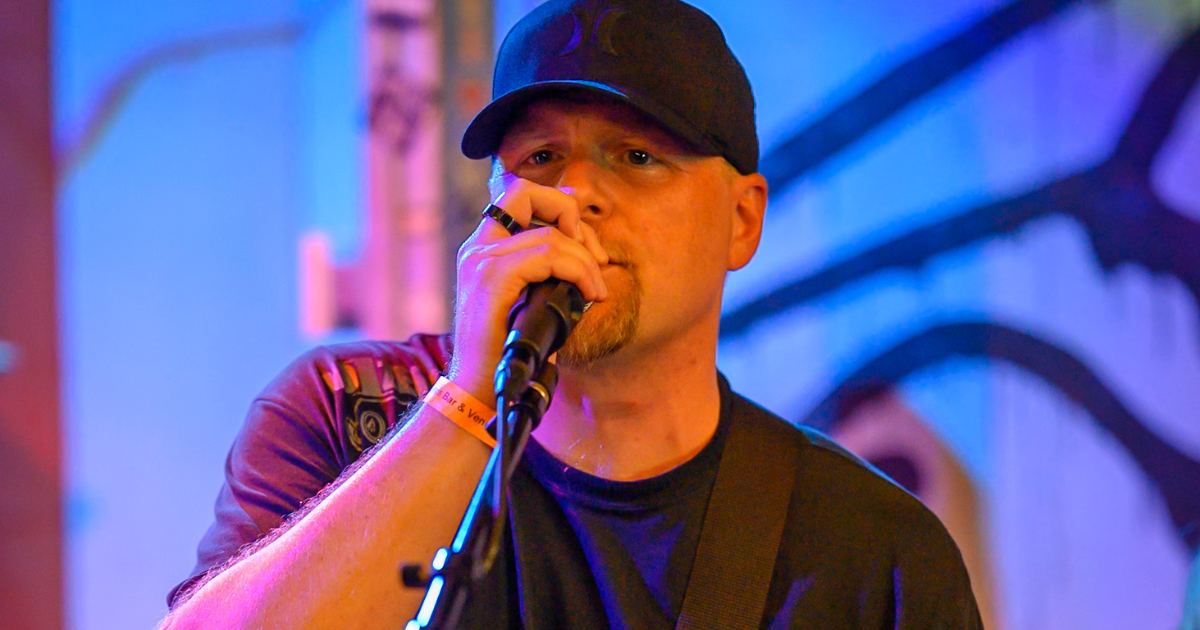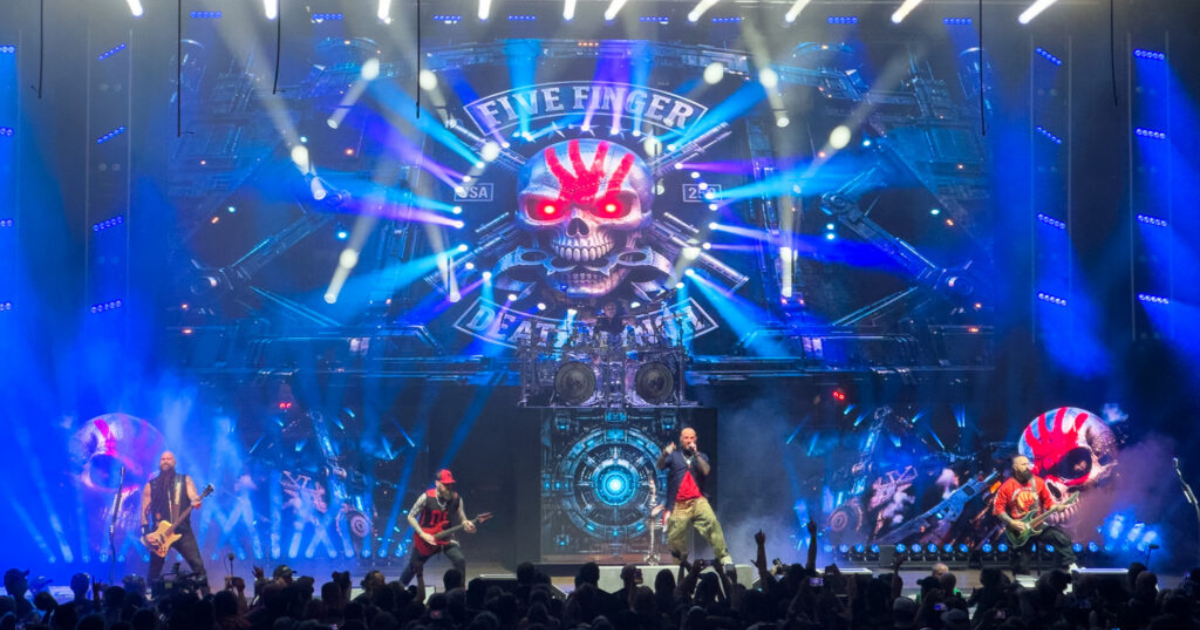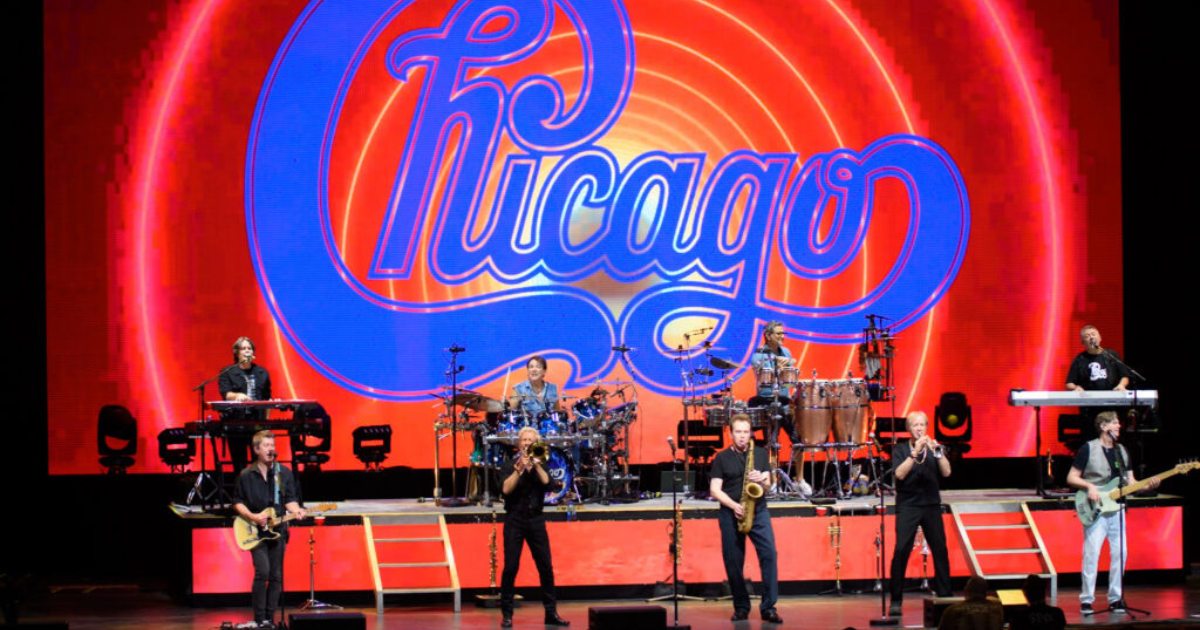

With multiple viewing levels, an 850-person capacity, strong production, free parking, and a layout that gives fans, and photographers, plenty of ways to experience a show, The King of Clubs has built one of Columbus’ most distinctive live music rooms.
Every concert venue makes choices.
Where does the stage go? How close can the audience get? Where do you put the bar? What happens to the people who would rather watch from above the crowd than spend two hours protecting their spot on the floor?
And, perhaps most importantly for those of us carrying cameras, can I actually move around?
The King of Clubs in Columbus, Ohio, seems to have spent some time thinking about those questions.
My first trip there came as a guest of Twist It during the band’s first tour. Seeing a band take that step is always memorable. There is an excitement surrounding a first tour that is difficult to manufacture. The band is discovering new rooms, new audiences, and probably a few new things that can go wrong when you put musicians and equipment in a vehicle and drive them from city to city.
Twist It rocked that night.
The venue made an impression, too.
The staff was friendly, the atmosphere was energetic, and the room felt built around the reason everyone was there: the music.
But it was my second trip to The King of Clubs, this time to photograph Legends Rise, a Godsmack tribute band, that allowed me to really explore what makes this venue work.
And from behind the camera, this place is a lot of fun.
Where Everyone Is Treated Like Royalty
Located at 6252 Busch Boulevard, roughly 10 minutes north of downtown Columbus, The King of Clubs describes itself as an all-inclusive concert venue where “everyone is treated like royalty.”
The independently operated venue has a capacity of 850 and features a full food and drink menu, a multi-tiered layout, and security-patrolled free parking. Its calendar crosses genres rather than limiting the room to a single corner of the music world.
That last point is worth emphasizing.
The King of Clubs certainly feels comfortable hosting rock and metal, and the venue’s schedule regularly reflects that, but it isn’t exclusively a metal club. Touring artists, tribute acts, alternative bands, country performers, and other genres find their way onto the calendar. The venue’s current and past listings include everything from heavy acts to country artists and tribute shows.
That variety gives the room flexibility.
But the building itself is what separates it from many similarly sized venues.
Look Up
Most concert venues at this level follow a familiar formula.
Stage at one end.
Big rectangular floor.
Bar somewhere behind you.
Good luck.
The King of Clubs does things differently.
Its multi-tiered layout means the concert can be experienced from several elevations and angles. Fans can get close to the stage, move to other areas of the room, or head upstairs and look down over the performance.
The venue itself promotes the idea that there isn’t a bad seat in the house, and after spending time moving throughout the building, I understand why.
You aren’t locked into one perspective for the entire night.
That matters more than people might realize.
For someone who wants to plant themselves directly in front of the stage and stay there until the final encore, that option exists.
For someone who wants a little breathing room, there are alternatives.
For people using the upstairs tables, the elevation creates an entirely different view of the show.
And then there’s the photographer wandering around looking suspiciously pleased with all of these options.
That would be me.
A Photographer’s Playground
Photographing Legends Rise gave me an opportunity to see The King of Clubs differently from my first visit.
I met with the band outside before the show and later spent time with them and members of the crew inside. Those interactions are always one of my favorite parts of concert photography. You get to see the transition between the people hanging around before the show and the performers who take over once the stage lights come on.
Once Legends Rise started playing, I went to work.
The first major advantage was obvious.
A photo pit.
Thank you.
Anyone who has photographed enough club shows knows that a dedicated photo pit feels like discovering someone reserved you a parking spot at the front door.
Instead of trying to shoot between raised phones, leaning around audience members, or apologizing every 30 seconds because you accidentally stepped into someone’s view, I could concentrate on the performance.
But the pit was only the beginning.
I had access throughout the venue, including the upstairs VIP area.
That changed everything.
Finding the Shot
One of the biggest challenges in concert photography is avoiding repetition.
You can have perfect exposure, sharp focus, and a great performer, but if every photograph is taken from approximately the same height and the same position in front of the stage, the gallery starts looking repetitive.
The King of Clubs gives photographers ways around that.
From the photo pit, I could capture the intensity of Legends Rise from close range.
Move farther back and the scale of the stage becomes visible.
Head upstairs and suddenly the entire perspective changes. From above, you can capture the band, audience, lighting, stage design, and overall architecture of the room in a single frame.
Those elevated positions were particularly useful for establishing shots, images that tell you not only who was performing but where the performance was happening.
That’s something I look for when shooting.
A great concert photograph should capture the artist.
A great collection of concert photographs should capture the night.
The King of Clubs made that considerably easier.
Let There Be Light
Of course, access means very little if you can’t see anything.
Fortunately, the lighting at The King of Clubs was pretty damn good.
That’s a technical assessment.
Probably.
Concert lighting exists primarily for the audience and the artist, not the photographer, and that’s exactly how it should be. But when a venue invests in production that gives performers dimension, movement, and separation from the background, photographers benefit as well.
The lighting during Legends Rise gave me enough variation to create different looks throughout the set rather than fighting against one continuous wash.
Behind the performers sits another major visual feature: a massive LED video wall.
Combined with the lighting system, the screen gives productions an opportunity to create a much larger visual presentation than you might expect from a room this size.
Televisions positioned throughout the venue extend that visual experience beyond the immediate area surrounding the stage.
The result is a club-sized venue capable of making a show feel significantly larger.
For a tribute band like Legends Rise, presentation matters. The audience isn’t simply there to hear familiar songs. They want the energy, power, and spectacle associated with the music.
The room supported that.
And Then There’s the Sound
A venue can look spectacular and still fail the moment someone turns on a microphone.
Fortunately, that wasn’t my experience here.
The sound at The King of Clubs has been strong during my visits.
Rock music, particularly heavier rock, needs room to breathe. Guitars have to remain defined without swallowing the vocals. The kick and bass need enough weight to hit you without turning the entire mix into low-frequency soup.
That’s easier to describe than accomplish.
Both Twist It and Legends Rise benefited from a room and production setup capable of delivering the energy of their performances without losing the musical details underneath the volume.
With Legends Rise especially, that mattered.
Godsmack’s music depends on weight. The guitars need aggression. The drums need impact. The vocals have to sit on top without sounding disconnected from everything underneath them.
The venue gave the band what it needed.
Beyond the Stage
Another strength of The King of Clubs is that the experience isn’t confined to the area directly in front of the stage.
There is outdoor space where guests can step away between sets, have a conversation, or simply take a break from the volume.
That’s an underrated feature.
I love live music, but occasionally it’s nice to have a conversation without communicating entirely through exaggerated facial expressions and pointing.
The venue also offers a full food and drink menu. Its official description emphasizes both the food and beverage program as part of the overall experience rather than treating concessions as an afterthought.
That makes The King of Clubs somewhere audiences can settle in for an entire evening rather than simply arrive for a headliner and immediately leave.
With multiple levels, seating options, food, drinks, an outdoor area, and different places from which to watch the show, the venue encourages people to move around and experience the building.
The Most Underrated Amenity in Live Music
Free parking.
There. I said it.
After spending enough time attending concerts in downtown areas, paying $20 or $30 to temporarily abandon your vehicle in a concrete structure starts to feel like an unavoidable part of the live music experience.
The King of Clubs offers its own security-patrolled lot with free parking.
It isn’t glamorous.
Nobody is buying a concert ticket because they heard great things about the asphalt.
But convenience matters.
Knowing you can drive to a venue, park nearby, attend the show, and leave without adding another expense to the evening makes the experience easier, particularly for fans traveling into Columbus from outside the city.
The venue is also only about 10 minutes north of downtown, giving it access to Columbus without requiring guests to navigate the parking headaches that often accompany a downtown concert.
Sometimes the best venue features are the ones you don’t have to think about.
A Room Built Around Live Music
After two visits, what stands out most about The King of Clubs is how deliberately the venue seems designed around the concert experience.
The multi-level layout improves sightlines.
The photo pit gives photographers a legitimate working area.
The upstairs sections provide different perspectives.
The LED wall and lighting give artists the tools to build a visually compelling production.
The sound system delivers.
The outdoor space gives people somewhere to reset between sets.
Food and drinks keep the night moving.
Free parking removes one more headache before you even walk through the door.
None of these features alone makes a great venue.
Together, they add up.
Two Shows, Two Perspectives
My two visits also allowed me to experience The King of Clubs in very different ways.
With Twist It, I was there primarily as their guest.
It was exciting to watch them perform during their first tour, knowing what that moment represented for the band. The staff treated me well, the performance was great, and the venue left a positive first impression.
With Legends Rise, I experienced the room as a working concert photographer.
I met the band outside, spent time with them and the crew, moved throughout the building, worked the photo pit, headed upstairs, experimented with different angles, and saw firsthand how much the architecture of a venue can affect the photographs that come out of it.
Both nights were memorable for different reasons.
And both made me want to return.
Long Live the King
Every venue in this series has had its own personality.
Some win you over with history.
Some with grit.
Some with hospitality.
The King of Clubs wins with options.
You can get close.
You can watch from above.
You can grab something to eat, step outside between sets, head back into the crowd, or find another vantage point entirely.
As a photographer, that’s gold.
As a concert fan, it’s just as valuable.
The atmosphere has been fun during both of my visits. The staff has been friendly. The sound has been strong. The production has been impressive, and the layout makes an 850-capacity venue feel intimate without feeling cramped.
Most importantly, both shows felt like events.
I would absolutely return to photograph another artist at The King of Clubs.
I’d return without the cameras, too.
Because once the lights go down, the LED wall comes alive, and the band takes the stage, the name starts making a little more sense.
For a few hours, everyone in the building gets a pretty damn good seat to the throne.
Venue at a Glance
Venue: The King of Clubs
Location: 6252 Busch Boulevard, Columbus, Ohio 43229
Capacity: 850
Venue Type: Multi-tiered live music and entertainment venue.
Location: Approximately 10 minutes north of downtown Columbus.
Programming: Artists across multiple genres and styles
Features: Multi-level viewing, VIP areas, photo pit, LED video wall, televisions throughout the venue, outdoor space, food and drinks.
Parking: Free, security-patrolled onsite parking.
Website: The King of Clubs official website
Phone: (614) 396-7114

With two stages, a sprawling dance floor, strong production, and enough room for everything from line dancing to nationally touring artists, Lori’s Roadhouse has become one of Greater Cincinnati’s most dependable destinations for live country music.
Some venues earn your attention with one unforgettable concert. The best ones give you a reason to keep coming back.
My first visit to Lori’s Roadhouse came after an invitation from Jason Hale, who was performing with Kyle Fields as the opening act for Clay Walker. I knew I was walking into a big night, but I did not yet know that I was also discovering a venue that would quickly become one of my favorites in the Greater Cincinnati area.
The show was sold out, the room was alive, and there was a sense of anticipation that extended well beyond the stage. Before the music started, I had an opportunity to try some of the food and spend time getting to know the rest of Kyle’s band. That included Lucy Becker, who had since appeared as a guest on The Jay Franze Show.
It was the kind of night that reminds you why live music matters. The concert was the centerpiece, but the conversations, introductions, food, atmosphere, and shared excitement surrounding the performance made the evening memorable.
That first experience also showed me what Lori’s Roadhouse does especially well: it gives live music enough space to feel like an event.
Located in West Chester Township, Ohio, Lori’s Roadhouse is a full-service restaurant and live entertainment venue occupying approximately 24,000 square feet. The facility features two stages, 250 dining seats, multiple large-screen televisions, and three bars. Its schedule regularly includes local, regional, and national performers, along with line-dancing events and other entertainment.
Calling the venue large does not quite capture it.
The main room opens into an expansive entertainment space anchored by a sizeable stage and a dance floor built for far more than a few people cautiously moving near their tables. There is room to dance, gather with friends, move around the venue, or settle in and watch the show.
Then there is the mechanical bull, because apparently watching other people make questionable decisions on a dance floor was not enough entertainment for one building.
The scale gives Lori’s flexibility. On one night, it can feel like a concert hall hosting an established touring artist. On another, it can become a neighborhood gathering place for line dancing, dinner, drinks, and local entertainment. Despite its size, the venue is arranged in a way that allows different experiences to happen under the same roof.
For concertgoers, that means an evening does not have to begin when the headliner walks onstage. Guests can arrive early, order food, meet friends, catch an opening act, or explore the venue before the main performance begins.
That was certainly true during my first visit. The time spent with the musicians before the show became just as much a part of the memory as the concert itself.
A venue reveals its real character over multiple visits.
Almost any room can deliver one successful evening when the artist, audience, and circumstances align. Consistency is harder. It requires a staff that remains approachable when the building is crowded, production that supports different performers, and an environment that works for more than one kind of guest.
Since that first Clay Walker show, I have returned to Lori’s Roadhouse several times. Each visit has offered a different perspective.
I have attended concerts there as a music fan. I have taken my daughters to a line-dancing night. Most recently, I photographed Devin Milton as he delivered an energetic performance from the Lori’s Roadhouse stage.
Those experiences were different, but they shared a common foundation: the venue felt prepared to host them.
That versatility is one of Lori’s greatest strengths. It is a legitimate concert destination, but it does not feel limited to major ticketed events. The dance floor, restaurant seating, bars, televisions, and secondary performance areas make the building useful even when the main stage is not hosting a nationally recognized artist.
The venue’s official calendar continues to feature a mixture of concerts and recurring events, reinforcing its role as both a touring stop and a local entertainment destination.
Every concert venue has to solve the same basic equation: provide enough room for a crowd without losing the connection between the artist and the audience.
At Lori’s Roadhouse, the large main stage provides performers with enough space to move, spread out, and present a complete show. Full bands do not appear squeezed into a corner originally intended for an acoustic duo. Artists have room to perform, and the audience has a broad visual focal point.
The size of the dance floor creates energy in front of the stage, particularly during country shows where the audience is unlikely to remain politely motionless for an entire set. At the same time, the venue’s dining areas and bars give guests options beyond standing in one place throughout the evening.
Multiple bars are especially valuable in a venue this size. No one buys a concert ticket hoping to spend the best song of the night trapped in a drink line. Having service areas distributed throughout the facility helps the building handle larger crowds while keeping people connected to the event.
My experiences with the staff have also been consistently positive. They have been friendly and helpful, even during busy performances.
One small interaction stands out. During one of the shows I attended with my daughter, the sound engineer provided her with a pair of earplugs. It was a simple gesture, but meaningful ones usually are. It showed awareness and a willingness to help without turning the moment into a production.
That kind of interaction matters. A venue can have an impressive stage, expensive equipment, and a packed calendar, but people remember how they were treated.
Concert photographers experience venues differently from the average guest.
While the audience sees the finished performance, a photographer is constantly evaluating light, movement, sightlines, stage height, access, and the ability to capture a performer without every image looking identical.
From that perspective, Lori’s Roadhouse has a great deal working in its favor.
The stage is large enough to let performers move naturally, which creates more opportunities for compelling images. Band members are not stacked on top of one another, and artists can use different areas of the stage throughout the show.
The lighting is another major advantage.
Good concert lighting does more than make an artist visible. It creates depth, separates performers from the background, supports the mood of the music, and gives photographers the chance to capture images that feel like the performance rather than merely document it.
While photographing Devin Milton, I was able to appreciate how well the stage and lighting translate through a camera. The room provides the visual scale of a larger concert venue while still allowing photographers to capture the personality and energy of the performer.
That combination makes me eager to photograph more shows there.
For a publication like Driving Red, which is built around live performances and the stories surrounding them, a venue that supports both the audience experience and quality concert photography is especially valuable.
Lori’s Roadhouse is not simply a stage with a bar attached. Food and hospitality are central parts of the venue’s identity.
The restaurant promotes a menu designed to accompany the live entertainment experience, while its three bars serve cocktails throughout the evening. The building also contains 250 dining seats, giving guests the option to make dinner part of the event rather than searching for somewhere nearby before the doors open.
That format worked particularly well during my first visit. Being able to eat at the venue while getting to know members of the opening band helped the evening unfold naturally. There was no sharp divide between dinner, conversation, and concert. It all felt like part of the same experience.
That is important because the most successful music venues understand that audiences are not only purchasing access to a performance. They are choosing where to spend an entire evening.
The better that full evening functions, the more likely they are to return.
Lori’s Roadhouse openly presents itself as a place where Greater Cincinnati audiences can experience live country music in a setting influenced by Nashville’s entertainment culture.
That comparison could easily become forced. Plenty of venues hang a few guitars on the wall, add something involving whiskey to the menu, and declare themselves the next Lower Broadway.
Lori’s has more substance behind the idea.
The large dance floor, two-stage format, national touring calendar, line-dancing events, restaurant service, and late-night atmosphere create a venue that borrows recognizable elements from Nashville without pretending West Chester is located in Tennessee.
More importantly, it provides opportunities for artists at different stages of their careers.
A nationally recognized artist can headline the main stage. Regional performers can appear as direct support. Local musicians can play in front of audiences who might not otherwise encounter them. A fan may arrive to see Clay Walker but leave remembering Kyle Fields, Jason Hale, Lucy Becker, or another musician introduced to them that evening.
That is how music scenes grow. The headliner may sell the ticket, but the entire lineup builds the community.
Taking my daughters to Lori’s Roadhouse for line dancing gave me another reason to appreciate the venue.
It demonstrated that the building can be more than a place where people stand shoulder-to-shoulder waiting for a famous artist. It can also be a space where families spend time together, new dancers learn the steps, regulars return to the floor, and live entertainment becomes something people participate in rather than simply observe.
The venue lists many events as all-ages, although age policies can vary, so guests should confirm the requirements for the specific show they plan to attend.
That ability to offer different types of programming broadens the venue’s role within the community. It gives people reasons to visit between major concerts and allows Lori’s Roadhouse to build an identity based on more than its biggest bookings.
A concert venue needs memorable artists. A lasting venue also needs regulars.
There is no single feature that makes Lori’s Roadhouse successful.
It is the combination.
It is the scale of the building without the sterile feeling of an arena. It is the large stage and strong lighting. It is the dance floor, multiple bars, dining space, mechanical bull, two-stage setup, and the ability to host everything from line dancing to a sold-out national concert.
It is also the smaller moments: meeting musicians before a show, sharing a night out with family, photographing an artist under good stage lighting, or watching a staff member notice that a young guest could use hearing protection.
Those moments give a venue its personality.
After several visits, Lori’s Roadhouse has become one of my favorite live music destinations in the area. It is a room I enjoy visiting as a concertgoer, a father, a journalist, and a photographer.
Each of those roles asks something different from a venue.
Lori’s has delivered for all of them.
The Greater Cincinnati region has no shortage of places where live music can be heard. What it needs are venues that treat live music as more than background noise.
Lori’s Roadhouse is clearly built around the show.
The stage is not an afterthought. The dance floor is not decorative. The lighting is not limited to making sure no one trips over a monitor. The building was designed to give performers room to perform and audiences room to turn an ordinary night out into an event.
I look forward to attending more concerts there, spending more nights with my family there, and photographing more artists on its stage.
Some venues are places you visit because a particular artist happens to be appearing there.
Lori’s Roadhouse has become a place worth watching on its own.
Venue: Lori’s Roadhouse
Location: 4924 Union Centre Pavilion Drive, Suite B, West Chester Township, Ohio 45069
Venue Type: Restaurant, live music venue, and event space
Size: Approximately 24,000 square feet
Stages: Two
Dining Capacity: 250 seats
Bars: Three
Primary Music: Country, with local, regional, and national performers
Features: Large dance floor, mechanical bull, multiple televisions, food, cocktails, line dancing, and private-event capabilities
Website: https://lrhlive.com/
Phone: (513) 603-6200
With its sunken concert floor, black cinderblock walls, riverside courtyard, and unmistakable old-school rock-club atmosphere, Annie’s Music Center offers a live music experience built on character rather than polish.
Some venues announce themselves with architectural grandeur, glowing marquees, and carefully designed entrances.
Annie’s Music Center reveals itself a little at a time.
You enter through a dark, industrial space, passing booths where bands can set up merchandise before the stage eventually appears on your left. The floors are concrete. The walls are cinderblock. Black dominates the room. There is no attempt to disguise the building as something sleek, refined, or newly manufactured.
It feels lived in.
More importantly, it feels like a rock venue.
The first time I walked into Annie’s Music Center, I was there to photograph Archers Gate. Almost immediately, the venue reminded me of the old-school music rooms I grew up around in Boston and encountered in New York, places where the paint was dark, the walls were hard, and the personality came from the people, the performances, and years of amplified music.
That first impression stayed with me.
So did the people.
Security took the time to verify my credentials without making the process unnecessarily difficult. The woman working the door was welcoming from the moment I arrived and even warned me about the rain as I was leaving at the end of the night.
Those may sound like small details, but small details often determine whether a venue feels inviting or transactional.
At Annie’s, the building may be made of concrete and cinderblock, but the experience has always felt human.
Located at 4343 Kellogg Avenue in Cincinnati, Annie’s Music Center is an indoor-outdoor live music and event venue positioned on the Ohio River. Its current branding invites guests to “Experience the Underground,” a fitting description for a room that embraces its dark, industrial surroundings rather than attempting to soften them.
The venue operates in the space formerly known as Riverfront Live and maintains both indoor and outdoor performance areas. Its calendar features touring artists, regional acts, local bands, and special events across a range of genres.
The indoor room does not feel like a repurposed restaurant with a stage pushed against one wall. It feels like a place designed around live music.
Walking in, guests pass areas where artists can sell merchandise. That positioning is valuable because it makes the merch tables part of the natural traffic flow rather than hiding them in some distant corner. Fans can meet the bands, pick up a shirt, or discover the opening act before moving farther into the room.
Then the venue opens up.
The stage sits to the left, with a lowered floor directly in front of it. That sunken section is one of the room’s most effective design features.
It allows fans to stand close to the performers without creating an uninterrupted wall of people in front of guests seated farther back. Those near the stage still get the intensity and immediacy of a general-admission rock show, while people at the tables retain a clearer view over the crowd.
It is a simple design choice that improves the room for almost everyone.
There is a particular kind of live music venue that has become increasingly difficult to find.
It is not a pristine theater where every surface appears freshly restored. It is not a multipurpose event hall that happens to host bands on weekends. It is not a bar where the stage competes with televisions, dinner conversations, and someone loudly explaining their fantasy football team.
It is a room where rock music makes sense.
Annie’s has that feeling.
The concrete floors and cinderblock walls give it an unapologetically industrial personality. The darkness works in its favor. The building does not need elaborate décor because the stage, crowd, equipment, and performers become the visual identity of the room.
That atmosphere immediately reminded me of venues from my hometown.
Boston’s older rock clubs were rarely concerned with appearing luxurious. They were concerned with creating a place where a band could plug in, turn up, and hold the room. New York had its own version of the same formula: dark spaces, close crowds, hard surfaces, questionable acoustics, and more personality than buildings several times their size.
Annie’s captures some of that character.
Perhaps that familiarity influenced my initial reaction. Nostalgia has a way of making concrete floors feel warmer than they actually are.
But I have returned enough times to know it was not only nostalgia.
The venue has a vibe that feels authentic because it does not appear to be trying too hard to create one.
Hard surfaces give a venue character, but they can also create challenges.
Concrete floors and cinderblock walls reflect sound. Reflections build on one another, low frequencies accumulate, and instruments can compete for space inside the room. A mix that sounds balanced near the console may change considerably as you move toward the walls, the stage, or the recessed floor.
Annie’s is not an easy room to mix acoustically.
That is not a criticism of the engineers who work there. It is an acknowledgment of the reality they face.
During my first night photographing Archers Gate, the music sounded good. The band came through with the weight and energy the performance needed. On a later visit, when I returned to photograph Life After This, Archers Gate, and Asayda, there were technical sound issues at different points throughout the evening.
Anyone who spends enough time around live production knows those nights happen.
Cables fail. Signals disappear. Equipment behaves perfectly during soundcheck and develops a personality disorder five minutes before the set. Monitors become uncooperative. Frequency problems appear once the room fills with people. Engineers troubleshoot while the audience remains blissfully unaware of how many small disasters are being prevented in real time.
A difficult room makes those moments even harder.
Despite the technical challenges I witnessed that night, they did not erase what the venue does well or change my overall opinion of the space. Annie’s remains a room with strong potential for loud, energetic performances, particularly when the band, engineer, and acoustics cooperate.
Perfection is not required for a venue to be worth supporting.
Character, effort, and memorable performances carry considerable weight.
Annie’s presents concert photographers with both opportunities and challenges.
The recessed floor in front of the indoor stage is a significant advantage. It provides a strong position close to the performers without requiring the photographer to stand directly in the sightline of everyone seated behind them.
That arrangement allows for low angles, direct stage views, and close performance shots while reducing the familiar tension between photographers and audience members who did not buy tickets to watch the back of someone’s camera.
The stage itself provides good access to the performers, particularly for high-energy rock bands that use the front edge of the platform.
The lighting is more complicated.
Annie’s has a lighting system and control board, but the lighting I have encountered there has been relatively basic. Blue and red washes are common. They look appropriate in the room and support the darker rock-club atmosphere, but they can make concert photography difficult.
Deep red light can overwhelm skin tones and eliminate detail. Saturated blue can create noise and flatten facial features. When both colors dominate for long periods, photographers have fewer opportunities to capture natural-looking images without significant adjustments afterward.
That does not make the venue impossible to photograph. Far from it.
It simply requires patience, careful exposure, an understanding of how digital sensors respond to heavily saturated light, and a willingness to wait for brief moments when the performer moves into a more favorable position.
Good concert photography is rarely about forcing ideal conditions. It is about recognizing what the room gives you and making the most of it.
I have now photographed Archers Gate there twice, along with Life After This, Asayda, and more. Each performance has given me a better understanding of the room, its lighting patterns, and the strongest positions from which to shoot.
I would gladly return with a camera.
At the back of the indoor venue sits the bar, and during my first visit, the bartender working there became one of the evening’s unexpected highlights.
She was extremely friendly, took good care of me, and offered recommendations when I asked about food.
Her recommendation required leaving the indoor room.
Next to the bar is an exit leading into a courtyard where the venue’s outdoor stage sits against the backdrop of the Ohio River. The official venue describes itself as an entertainment destination with indoor and outdoor performance space, and the courtyard gives Annie’s an entirely different dimension once guests step outside.
There was also a food truck.
Apparently, that food truck would prepare an off-menu appetizer sampler for anyone who knew to ask.
Thanks to, I won't say, the bartender, I knew to ask.
She was right.
It was a small insider recommendation, but it made the night better. Unfortunately, I did not get her name, so she will have to remain Annie’s anonymous ambassador of food-truck hospitality.
Every venue should have at least one person who knows the unofficial menu.
The interaction also reinforced something I noticed throughout that first visit: the staff seemed genuinely interested in helping guests enjoy the night.
Security was professional. The door staff was friendly. The bartender was attentive. No single interaction felt extraordinary on its own, but together they created an experience that felt welcoming.
Venues often invest heavily in production while underestimating the importance of the first and last people a guest encounters.
Annie’s got those moments right.
The outdoor section changes the scale and personality of Annie’s Music Center.
After spending time inside a dark, enclosed rock room, stepping into a courtyard beside the Ohio River feels like entering a second venue. The outdoor stage, open air, river setting, food service, and additional gathering space provide an entirely different experience without requiring guests to leave the property.
That dual setup gives Annie’s flexibility.
The indoor stage is well suited for heavy music, club shows, and performances that benefit from a dark, concentrated atmosphere. The outdoor area can accommodate shows that call for more space, fresh air, and the visual backdrop of the river.
Not every venue can shift between those identities.
Annie’s can feel underground and open-air on the same night.
For concertgoers, that creates room to step away from the intensity of the indoor floor without disconnecting entirely from the event. For promoters, it creates options. For artists, it provides opportunities to perform in different settings depending on the event, audience, and time of year.
It also gives the venue more personality than a standard rectangular concert hall.
My experiences at Annie’s have been tied closely to the bands I have photographed there.
Archers Gate introduced me to the room.
Life After This brought its own aggressive rock energy to the stage.
Asayda added another layer to a lineup that demonstrated how naturally heavier music fits the venue.
A room like Annie’s benefits from performers who do not require everything to be polished. Rock and metal bands know how to use darkness, volume, closeness, and imperfection. They can turn hard walls and limited lighting into part of the show.
That is when the venue works best.
The room does not disappear behind the artist. It becomes part of the performance.
The walls reflect the sound. The recessed floor brings the crowd toward the stage. The red and blue lighting creates a dense visual atmosphere. The merchandise booths, outdoor courtyard, bar, and food truck extend the evening beyond the individual sets.
A sterile venue can host a technically perfect concert and still be forgotten.
Annie’s is unlikely to be mistaken for sterile.
After my first visit, I knew I wanted to return.
I was drawn back partly by the bands, partly by the photography opportunities, and partly by the atmosphere. There is also something personally familiar about the place.
Annie’s reminds me of where I came from.
It recalls the venues where rock music was experienced up close, where the room carried scars, where the walls were not designed for acoustic perfection, and where the people working the door or standing behind the bar could define the entire night.
That does not mean the venue is without limitations.
The acoustics can be challenging. The production has experienced technical issues. The lighting can make photography difficult, especially when the stage remains saturated in red or blue.
A credible venue spotlight should acknowledge those things.
But none of them outweighs the full experience.
I would return to photograph another band. I would return without a camera simply to watch a show. I would recommend the venue to people who prefer their live music rooms dark, loud, unpretentious, and full of character.
There is value in polish.
There is also value in a venue that feels real.
Annie’s Music Center is not trying to compete with a seated theater, a downtown arena, or a carefully themed entertainment complex.
It offers something different.
It offers an old-school concert-room experience at a time when many venues are becoming increasingly polished, standardized, and interchangeable.
You walk past the merch booths. The stage appears to your left. The floor drops in front of it. The bar waits at the back. A door leads outside to another stage, the river, and a food truck that may or may not have a secret appetizer sampler.
The staff welcomes you.
The band turns up.
The concrete room comes alive.
Maybe I love Annie’s because it reminds me of Boston. Maybe it is because the venue has introduced me to memorable performances. Maybe it is the bartender whose name I never learned, the door attendant warning me about the rain, or the security team taking my credentials seriously.
Most likely, it is all of those things together.
Annie’s Music Center is imperfect in the ways old-school rock venues have always been imperfect.
That is also part of what makes it memorable.
Venue: Annie’s Music Center
Location: 4343 Kellogg Avenue, Cincinnati, Ohio 45226
Venue Type: Indoor-outdoor live music and event venue
Stages: Indoor and outdoor performance areas
Setting: Located near the Ohio River
Atmosphere: Dark, industrial, and reminiscent of a traditional rock club
Features: Recessed standing floor, table seating, bar, merchandise areas, courtyard, outdoor stage, and food-truck service
Music: Local, regional, and touring artists across multiple genres
Website: https://www.anniesmusiccenter.com/
Contact: help@anniesmusiccenter.com