
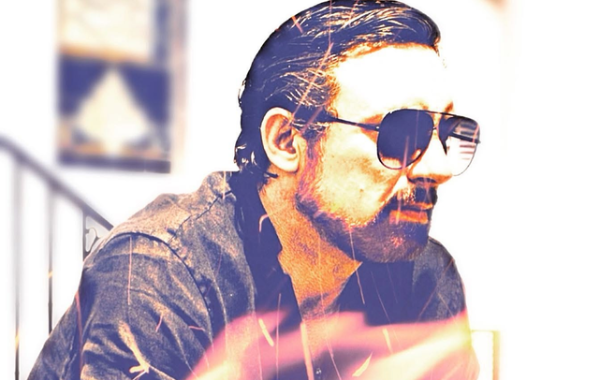
From gospel roots and Nashville songwriting rooms to the deeply personal story behind “The Devil,” Chad Wilson is discovering that the greatest success in music isn’t always measured by awards or chart positions.
There’s a moment in every songwriter’s career when the music stops being just something they create and becomes something much bigger than themselves.
Sometimes it happens when a song reaches the charts. Sometimes it’s the first time an audience sings the words back. And sometimes it happens when a complete stranger reaches out and tells you that something you wrote helped them through the darkest moment of their life.
For country artist and songwriter Chad Wilson, that last experience has changed the way he looks at music.
I’ve known Chad for years. We’ve written songs together, spent time in recording studios, and had plenty of conversations about the music business. I’ve watched him work, and I’ve seen the passion he brings to his songwriting. He’s one of those guys who genuinely loves what he does, and he doesn’t need much encouragement to start talking about music.
But when we sat down for this conversation, I discovered another side of Chad.
Behind the awards, the songwriting credits, and the recordings is a man who has experienced his share of personal struggles and has found a way to turn those experiences into something meaningful for other people.
We talked about his gospel upbringing, the lessons he’s learned from Nashville’s best songwriters, the complicated journey of recording his album This Side of a Song, and the emotional story behind his single “The Devil.”
We also talked about something that doesn’t get nearly enough attention in the music industry.
The responsibility that comes with creating something that reaches people when they’re at their most vulnerable.
And as Chad explained, sometimes the people who say his music has helped them end up helping him just as much.
From the Church Pew to the Songwriting Room
Long before Chad Wilson was recording country music or accepting awards, he was a kid growing up surrounded by gospel music.
And when I say surrounded, I mean there wasn’t much opportunity to escape it.
His parents were singers. His mother played piano, and his grandparents performed as the Johnson Quartet, a well-known gospel group in their circles.
If there was a church service or gospel singing, the family was there.
And those events weren’t limited to Sunday mornings.
Chad remembered attending gatherings two or three times a week.
Music wasn’t an extracurricular activity in his family. It was simply part of everyday life.
He learned piano from his mother, absorbed the harmonies and traditions of gospel music, and developed an appreciation for the way a song could communicate something important to an audience.
But his interest in writing started somewhere else entirely.
For a couple of years, Chad’s family lived in Missouri, where he attended a small school.
In third grade, he entered a school-wide writing competition.
And won.
That experience stuck with him.
He discovered that he loved words.
Not necessarily songs at that point, but the act of putting thoughts together and creating something from them.
It wasn’t until he was fifteen that he wrote his first song.
And like plenty of fifteen-year-old boys who discover songwriting, his early material involved a girl and a broken heart.
Some traditions never change.
But Chad knew almost immediately that songwriting was something he wanted to pursue seriously.
By the time he moved to Nashville, he’d written more than a thousand songs.
Not all of them were good.
In fact, Chad laughed about the number of nights he’d spent burning pages of lyrics that didn’t make the cut.
I appreciate that kind of honesty.
People tend to imagine successful songwriters sitting down, having a moment of inspiration, and producing something brilliant.
Occasionally, that happens.
More often, you write something terrible, realize it’s terrible, and try again.
Then you repeat the process until something finally works.
Chad understands that better than most.
And he believes the feeling of finally writing a good song makes all those discarded pages worthwhile.
A Thousand Songs and a Different Way of Thinking
One of the things I’ve always enjoyed about talking with songwriters is discovering how differently they approach the same task.
Give five writers the same idea, and you’ll probably get five completely different songs.
Chad generally begins with what Nashville writers call the hook.
It’s the central idea, often the title, that gives the song its direction.
He knows where he wants to go before he starts writing.
Then he builds the story around that destination.
It’s a familiar approach in country music, where a strong title or clever turn of phrase can become the foundation of an entire song.
But Chad recently found himself working with somebody who approached songwriting from the opposite direction.
Anthony Smith.
Chad considers Smith one of his songwriting heroes, and getting the opportunity to write with him was a significant moment.
But their methods couldn’t have been more different.
Instead of starting with a hook and working toward it, Smith would write a line and allow that line to determine what came next.
Then the next line would determine the one after that.
The song developed without a predetermined destination.
For Chad, that was uncomfortable.
Actually, uncomfortable might be putting it mildly.
He admitted that he struggled to contribute because he wasn’t accustomed to working without knowing where the song was headed.
He felt out of his element.
But the process worked.
They finished a song that Chad loved enough to include on his album.
And the experience taught him something.
Sometimes the best thing a songwriter can do is stop trying to control the destination.
That doesn’t mean abandoning structure or craftsmanship.
It means being willing to follow an idea somewhere unexpected.
Chad also credited writers such as Chris Rowe with helping him develop his own approach to songwriting.
Every collaboration taught him something different.
And even after writing more than a thousand songs, he’s still learning.
That’s one of the things I respect most about experienced musicians.
The good ones never seem to believe they’ve learned everything.
When a Song Wakes You Up
Not every song begins with two writers sitting across from each other in a Nashville writing room.
Sometimes an idea shows up when it’s least convenient.
Chad described waking from a deep sleep with a song already forming in his head.
One example was “Alabama Will.”
He got out of bed, went into his writing room, and wrote down most of the song before returning to sleep.
He described the experience as though the song had arrived from somewhere outside himself.
Almost as if he were simply the person responsible for getting it onto paper.
I’ve heard other songwriters describe similar experiences.
They’ll spend weeks fighting with a song that refuses to cooperate, then wake up at three in the morning with an entirely different one practically finished.
It’s not a particularly reliable business model.
But creativity has never been especially concerned with business hours.
For Chad, the key is remaining open to those moments.
He loves people, enjoys life, and surrounds himself with friends who share his passion for writing.
So inspiration isn’t something he feels he has to chase.
It’s usually somewhere nearby.
Learning to Write for Somebody Else
Chad also told me about a project that pushed him outside his comfort zone.
A man approached him wanting to make a gospel album.
There was one problem.
The man had never recorded an album or written a song.
He needed help with virtually every part of the process.
Chad was familiar with gospel music, of course.
He’d grown up with it.
But despite that background, he hadn’t written many gospel songs professionally.
And he’d never been particularly interested in teaching somebody how to write.
He joked that patience wasn’t exactly his strongest quality.
So the project presented two challenges.
He had to help an inexperienced writer develop material, and he had to return to the musical tradition that had shaped his childhood.
But Chad enjoys a challenge.
He began working with the artist, helping develop songs and guide the project toward recording.
By the time we spoke, they’d spent months writing together, and Chad expected several of their collaborations to appear on the album.
What impressed me was that Chad didn’t approach the project simply as a hired songwriter.
He became invested in helping somebody else realize a dream.
And that willingness to support another artist would become a recurring theme throughout our conversation.
This Side of a Song: The Album That Refused to Follow the Plan
When we turned our attention to Chad’s album This Side of a Song, he laughed about how long the project had taken.
It certainly hadn’t followed the original schedule.
There had been different studios.
Different producers.
Unexpected delays.
And enough changes to make the original plan almost unrecognizable.
The album began with ten songs.
By the time the project developed into a twelve-song record, only four or five of the original selections remained.
That’s not unusual.
An album can take on a life of its own.
You start with a collection of songs you believe represents the artist.
Then somebody writes something better.
A new recording changes the direction.
Or a song emerges that suddenly explains what the entire project is supposed to be about.
That’s what happened with the title track.
Chad hadn’t even written “This Side of a Song” when the recording process began.
The song arrived later.
And once it was finished, he realized it captured something central to his life.
The experience of being an entertainer.
Not the glamorous version.
The everyday reality.
The View From the Other Side of the Microphone
“This Side of a Song” tells the story of a musician who performs in the same bar weekend after weekend.
From the audience, the musician is simply the person providing entertainment.
But from the stage, he sees something else.
He sees the regulars.
The relationships.
The heartbreak.
The arguments.
The people celebrating.
And the people who show up because they don’t want to be alone.
Every weekend, another chapter unfolds.
And the musician witnesses all of it.
That’s a perspective most people never consider.
When you’re sitting in the audience, you tend to think the performer is focused entirely on the music.
Sometimes that’s true.
But musicians notice things.
We recognize familiar faces.
We see couples who were together last month sitting at opposite ends of the room this month.
We notice the person who comes in alone every Friday.
And we see how a song can change somebody’s mood.
Chad has spent enough time performing in clubs to understand that world.
The song wasn’t simply a fictional story.
It reflected years of his own experience.
And that made it the perfect title track for an album built around his life as a songwriter and performer.
A Record Built Across Studios and Circumstances
Producing This Side of a Song required more flexibility than Chad originally anticipated.
He co-produced the album, working with several collaborators as circumstances changed.
The early single “Lie Like He Loved Me” came from a period when he was working with producer and guitarist Aaron Rodgers.
Then COVID disrupted everything.
Rodgers became seriously ill and spent months hospitalized.
The situation eventually forced changes to the recording plans, including the closure of his studio.
Chad was concerned about his friend, and the album naturally became a secondary priority.
Eventually, they decided the project needed to move forward with a different production arrangement.
Rodgers remained connected to the music, but Chad began working with other producers.
Eric Torres contributed to “The Devil.”
Nick Sturms helped co-produce several tracks at Red Three.
Other material originated during sessions intended for an unreleased Wilson Brothers project in Muscle Shoals.
And Chad remained the common thread throughout the process.
He was involved in the songwriting.
The musicians.
The production decisions.
And the overall direction.
As someone who has spent years producing and engineering records, I understand how difficult that can be.
When a project moves between multiple studios and producers, maintaining a consistent identity becomes a challenge.
Different engineers hear things differently.
Different rooms influence performances.
And different producers bring their own ideas about what a song should become.
Chad’s responsibility was making sure the finished record still sounded like him.
Nashville, Muscle Shoals, and the Character of a Studio
Naturally, I wanted to talk about the studios.
That’s what happens when you put a recording engineer and an artist together.
Eventually, somebody starts asking about microphones, musicians, and recording schedules.
Chad had worked in several notable recording environments, including Nashville’s Blackbird Studio and facilities in Muscle Shoals.
He also spoke about working with Chris Rowe at the Love Shack and learning from the way experienced producers organize sessions.
For Chad, the biggest difference between studios wasn’t necessarily the city.
It was the people.
Every room had its own atmosphere.
Its own history.
Its own character.
He described the feeling of standing in a legendary studio and realizing how much important music had been recorded there.
There’s something about that experience.
You can know intellectually that a room is famous.
But when you’re standing in it, looking at the equipment and imagining the musicians who worked there before you, the history becomes tangible.
I’ve experienced that in Nashville studios.
And I understand what Chad means.
But I was also interested in the difference between Nashville’s structured recording environment and the more relaxed schedules I’d experienced working in places like New York.
Nashville sessions often operate on a clock.
Musicians arrive.
Equipment is ready.
The session begins.
And everybody knows the schedule.
Chad had experienced that approach.
He’d also recorded sessions that didn’t begin until ten or eleven at night and continued until morning.
Both had advantages.
But he emphasized the importance of pre-production.
If you do the creative work before the session begins, a structured recording schedule doesn’t have to interfere with the music.
You arrive knowing what you want.
The musicians understand the direction.
And the studio time can be spent capturing performances rather than debating arrangements.
That’s something I wish more artists understood.
A great recording often begins long before anybody presses the record button.
Bringing the Road Band Into the Studio
One decision Chad made during the album’s production was particularly meaningful.
He brought members of his touring band into the studio.
In Nashville, touring musicians and session musicians often operate in different professional circles.
Some players do both, of course.
But it’s common for an artist to tour with one group and record with another.
Chad didn’t see a reason to make that distinction.
His band was talented.
They knew his music.
And they deserved the opportunity.
There was also another factor.
COVID had devastated the live music industry.
Shows disappeared almost overnight.
Musicians who depended on touring suddenly found themselves without work.
Chad wanted to help his bandmates whenever possible.
So when he had recording opportunities, he brought them in.
The musicians included drummer Josh Raymond, bassist Darius “A.D.” Stewart, guitarist Aaron Rodgers, and keyboardist Jonathan Smith.
Chad praised their abilities individually, but he was especially proud of the sound they created together.
Jonathan brought a soulful influence that Chad welcomed into his country music.
And Chad wasn’t interested in drawing strict boundaries around the genre.
A little soul, he figured, could only make the music better.
I agree.
Some of the best country records ever made borrowed freely from gospel, blues, soul, and rock.
That’s not a weakness.
That’s part of what makes the music interesting.
The Song That Changed Its Meaning
Of everything we discussed, the story behind “The Devil” was the most personal.
And perhaps the most important.
The song began during a difficult period in Chad’s life.
He was going through a divorce.
At the same time, the Wilson Brothers were experiencing the kind of career momentum he’d spent years dreaming about.
They were traveling.
Promoting their music.
And pursuing opportunities that once seemed out of reach.
Professionally, things were moving forward.
Personally, Chad was struggling.
He described feeling caught between two completely different emotional realities.
On one hand, he was living his dream.
On the other, he was dealing with the loss of a relationship and the emotional weight of divorce.
And he hadn’t really had time to process it.
He knew he was vulnerable.
He knew that difficult circumstances could lead to destructive decisions.
So he began writing a song about resisting those darker impulses.
He worked on it with Isaac Moore.
And “The Devil” began taking shape.
Originally, the song was a reflection of Chad’s own experience.
The temptation to make bad decisions.
The struggle to remain grounded.
And the need to believe in something larger than the problems immediately in front of him.
But something happened after the song was written.
Its meaning began to expand.
When the Director Heard Something Different
Chad was introduced to filmmaker Kyle Smithson through Kyle Saylors.
Smithson had his own history of personal struggles, including addiction.
When he heard “The Devil,” the song connected with his experiences in a way Chad hadn’t anticipated.
And that connection changed the direction of the music video.
The two began discussing a visual story that would address suicide awareness.
The song had originally been written from the perspective of a man struggling through divorce and emotional vulnerability.
But the video would explore a different kind of darkness.
A person dealing with grief, loss, and increasingly destructive decisions.
The story follows a character mourning a friend lost in war.
Unable to cope with the grief, he turns toward alcohol and other harmful behaviors.
His situation becomes progressively worse.
And eventually, he reaches a moment of crisis.
The filmmakers wanted to communicate something important.
Even in the darkest moments, there can still be a way forward.
For Chad, that message became central to the song.
He explained that a songwriter’s original intention and the meaning a song eventually takes on aren’t always the same.
Sometimes listeners hear something the writer never anticipated.
And sometimes that interpretation becomes more important than the original idea.
“The Devil” is a perfect example.
A Burning Piano and a Serious Message
The video for “The Devil” is visually dramatic.
It uses imagery of grief, isolation, emotional struggle, and ultimately hope.
And then there’s the piano.
A baby grand piano surrounded by flames.
I had to ask about that.
Because from a production standpoint, putting a piano on fire is not exactly a standard item on a music video checklist.
Chad told me he wanted the image.
Smithson figured out how to make it happen.
The crew transported the piano through the woods and onto a bridge.
Special-effects supervisor Conley Wilson handled the fire effects.
And according to Chad, the work was so carefully controlled that the piano emerged without visible damage.
That’s impressive.
And probably a relief to whoever owned the piano.
But beyond the technical accomplishment, Chad understood that the visual storytelling belonged largely to Smithson.
He didn’t want to micromanage a director who knew what he was doing.
Chad explained that when he works with talented people, he prefers to give them room to do their jobs.
That’s a smart approach.
Whether you’re producing a record or directing a music video, collaboration works best when people trust each other’s expertise.
Chad wanted the video’s imagery to communicate the emotional meaning of the song.
Smithson took that responsibility seriously.
And together, they created something that resonated far beyond a typical music video release.
The Choir That Changed Everything
One of the most powerful musical moments in “The Devil” arrives when the choir enters.
My wife loves that part.
And I understand why.
The arrangement builds toward a moment where the additional voices give the song a sense of emotional release.
It’s a dramatic shift.
And from a production standpoint, it’s exactly the kind of decision that can elevate a recording.
Chad wanted the choir to be special.
He also wanted to support a historic Nashville recording studio.
He’d recently met a woman named Judy, who was working to restore activity at a Music Row studio associated with her late husband.
Chad appreciated her determination to keep the studio’s legacy alive.
So when the opportunity came to record the choir, he wanted to do it there.
Through his bass player, he connected with the people who could bring the singers together.
And the choir became one of the defining elements of the track.
The recording also featured cellist Gabe Baker, whom Chad had met at a songwriting retreat.
Baker’s contribution added another emotional dimension to the arrangement.
Other musicians and producers contributed across the different stages of the song’s development.
It was a collaborative effort.
But every element served the same purpose.
The recording needed to communicate the emotional weight of the lyrics.
Chad wasn’t interested in simply creating a dramatic sound.
He wanted the audience to feel something.
The First Time He Hears It Live
At the time of our conversation, Chad had performed “The Devil” acoustically.
Audiences requested it regularly.
But he hadn’t yet performed the full arrangement with a band and choir.
I asked whether he thought the emotion might make the song difficult to sing.
He acknowledged that it could.
But he also laughed about another possibility.
He might become so distracted by how good the choir sounded that he’d forget the words.
I can appreciate that.
When you’ve spent months working on a recording, imagining the arrangement, and hearing it develop in the studio, the first live performance can be overwhelming.
Especially when you’ve never heard all the pieces come together onstage.
Chad was looking forward to that experience.
And he understood that the moment could be emotional for reasons that went well beyond the lyrics.
The People Who Wrote Back
The response to “The Devil” surprised Chad.
Listeners began leaving deeply personal comments on YouTube.
They shared experiences with depression, grief, addiction, and suicidal thoughts.
Some described situations they’d never openly discussed before.
Others contacted Chad directly.
And he took the time to listen.
He told me about a young mother who had survived previous suicide attempts and was struggling again.
After hearing the song, she reconsidered her plans and thought about her infant child.
Chad spent time communicating with her and learning her story.
He also described a man who survived a suicide attempt when a firearm failed to discharge.
The experience changed that man’s understanding of his own life.
Eventually, he and Chad became friends.
These are difficult stories.
And they’re not the kind of things anyone should treat casually.
But Chad was deeply affected by the trust people placed in him.
They weren’t simply telling him they liked his song.
They were sharing moments of extraordinary vulnerability.
And Chad believed he had a responsibility to listen.
What struck me was how he described those conversations.
He didn’t talk about them as proof that he’d written a great song.
He talked about the people.
Their courage.
Their experiences.
And the lessons he’d learned from them.
He said the listeners often thanked him for helping them.
But he believed they were helping him too.
That kind of connection is difficult to measure.
It won’t necessarily show up on a chart.
It may not generate significant streaming revenue.
But it’s real.
And for Chad, it has become one of the most meaningful parts of his career.
A Song Can Become Bigger Than Its Writer
I’ve worked with artists for decades, and one thing I’ve learned is that you never completely control how somebody experiences a song.
You can spend months making sure every lyric communicates exactly what you intended.
You can obsess over the arrangement.
The vocal performance.
The mix.
And the final master.
Then somebody hears it through the filter of their own life.
And suddenly, the song means something entirely different.
That’s not necessarily a problem.
In fact, it’s often the most powerful thing music can do.
Chad wrote “The Devil” during a painful divorce.
The song became a way to express his own vulnerability.
Then a filmmaker connected it to his experiences.
A music video expanded its message toward suicide awareness.
And listeners began finding their own stories inside it.
The song evolved.
Not because the recording changed.
But because the people hearing it brought their own experiences.
Chad told me that his goal is to give a voice to people who may not know how to express what they’re feeling.
That’s an ambitious goal.
But it’s also one of the best reasons I can think of to write a song.
Music doesn’t solve every problem.
And a song isn’t a substitute for the support or professional care somebody may need during a crisis.
But it can create a moment of connection.
It can remind somebody that another person understands what they’re going through.
And sometimes that moment matters more than the songwriter ever imagined.
The Awards Are Nice, but They Aren’t Everything
Chad has received recognition for his work.
He and his brother earned back-to-back Josie Music Awards as a duo or group.
Chad later won the 2022 Josie Music Award for Country Male Vocalist of the Year.
He remembered being so nervous when his name was announced that he barely recalled walking to the stage or delivering his acceptance speech.
He had to watch the video afterward.
I love that.
Here’s a guy who’s spent years performing, writing, and recording music.
Put him onstage with a microphone and a song, and he’s comfortable.
Call his name at an awards ceremony, and suddenly he’s wondering what happened.
Awards are meaningful.
They represent recognition from people who appreciate the work.
And Chad was genuinely grateful.
But when we discussed the things that mattered most to him, he kept returning to relationships.
His family.
His friends.
His collaborators.
And the people who connected with his music.
That told me more about Chad than any trophy could.
The Songwriting Retreats and the People Who Make the Music
One of the things Chad particularly enjoyed about recording This Side of a Song was the opportunity to work with writers he admired.
He mentioned Eric Dillard, Dan Smalley, Lance Dubroc, Anthony Smith, and several others who contributed to the project.
Some songs came from songwriting retreats.
One particularly productive gathering took place in Whitefish, Montana.
Chad worked with talented writers there and came away with several songs he believed were strong enough to include on the album.
Those retreats can be valuable experiences.
You’re away from the normal distractions.
Surrounded by people who understand the craft.
And encouraged to create.
Sometimes the most important part isn’t even the song you finish.
It’s the relationship you build with another writer.
That connection may lead to another collaboration months or years later.
Chad understands that.
And he’s grateful for the people who’ve welcomed him into those creative environments.
He also talked about a song called “Frame,” which he co-wrote with Warren Garrett.
Just before our interview, Chad learned that the song had become a semifinalist for American Songwriter‘s Song of the Year competition.
He was excited.
And he hadn’t even had time to call Garrett with the news.
That’s one of the things I enjoy about talking with working songwriters.
There’s always another song.
Another opportunity.
Another project.
The career doesn’t stop when an album is finished.
In many ways, that’s when the next chapter begins.
Unsung Heroes: The People Who Show Up When the Music Stops
Toward the end of our conversation, I asked Chad one of my favorite questions.
Who deserves recognition behind the scenes?
Who helped make the career possible?
Who contributed without receiving the spotlight?
Chad struggled to name just one person.
Not because nobody came to mind.
Because too many people did.
He mentioned his former manager, Bretta Willis, and the support she’d provided throughout his career.
He talked about friends who helped emotionally and financially.
But then he shared something more personal.
He’d recently experienced a serious illness around Christmas.
For the first time in his career, he was forced to cancel an extended stretch of performances.
An entire month of shows.
For somebody who loves being onstage, that was difficult.
But what affected him most was the response from the people around him.
Friends checked on him.
Fans reached out.
People sent groceries to his house.
They knew he was sick.
They knew he was struggling.
And they wanted to help.
Chad was overwhelmed by the kindness.
These weren’t necessarily people with industry connections.
They weren’t record executives or major producers.
Some were people he’d met through his music.
People who’d attended a show.
People who believed in him.
And when he needed support, they showed up.
For Chad, those were the unsung heroes.
The people who continued believing in him when he couldn’t perform.
The people who cared about the person, not just the artist.
I think there’s an important lesson in that.
The music business spends an enormous amount of time celebrating success.
The awards.
The record deals.
The sold-out shows.
But sometimes the people who matter most are the ones who bring groceries when you’re sick.
There’s no trophy for that.
And there probably should be.
Being a Good Person Is Still Good Business
Before we finished, I asked Chad what advice he’d give aspiring songwriters.
He immediately joked that they should quit.
Then he laughed.
He’d given the same answer to a young artist named Caitlin Kroger, whom he’d been working with.
It had become something of a running joke between them.
But when Chad got serious, his advice was simple.
Be a good person.
That’s it.
Not a complicated songwriting formula.
Not a secret approach to pitching songs.
Not a particular networking strategy.
Be a good person.
Treat people well.
Develop relationships.
And remember that the music business is made up of human beings.
It’s advice that sounds almost too simple.
But after decades in Nashville, I can tell you it’s more important than people realize.
Talent matters.
Work ethic matters.
Professionalism matters.
But nobody wants to build a career around somebody they can’t stand being around.
And reputations have a way of traveling.
Chad has built his career through collaboration.
He writes with friends.
Works with musicians he respects.
And tries to create opportunities for other people.
That approach has served him well.
More Than This Side of a Song
By the end of our conversation, Chad was excited about getting This Side of a Song into the world.
He’d invested an enormous amount of time, energy, and emotion into the project.
The recording process had been complicated.
The pandemic had disrupted his plans.
Personal challenges had influenced his songwriting.
And the album had evolved into something different from what he’d originally imagined.
But he was proud of it.
And he had every reason to be.
What interested me most, though, wasn’t simply the finished record.
It was the journey that brought him there.
A kid growing up around gospel quartets discovers he loves writing.
A teenager writes his first song about heartbreak.
A young songwriter burns through hundreds of pages before finding his voice.
A country artist experiences career success while struggling through a divorce.
And a song written during that difficult period becomes a source of connection for people facing their own challenges.
That’s a remarkable progression.
And it’s one Chad never could have planned.
The title This Side of a Song feels particularly appropriate.
Because Chad has spent much of his life seeing music from the performer’s side of the microphone.
He knows what it takes to write the songs.
Record them.
Promote them.
And perform them.
But through “The Devil,” he’s discovered something about the other side.
The audience.
The people who take those songs home.
Who listen when nobody else is around.
Who find a piece of their own lives in the lyrics.
And who sometimes reach back across that invisible line to tell the songwriter what the music meant to them.
For Chad Wilson, that connection has become more valuable than any award.
And after hearing his story, I understand why.
The awards recognize what he’s accomplished.
The songs reveal who he is.
But the people who connect with those songs?
They’re the reason he keeps writing.
And if there’s one thing I’ve learned from spending time with Chad, it’s that the best music doesn’t always come from having the answers.
Sometimes it comes from being willing to share the questions, the mistakes, and the struggles that make us human.
Chad Wilson has found a way to do exactly that.
One song at a time.