
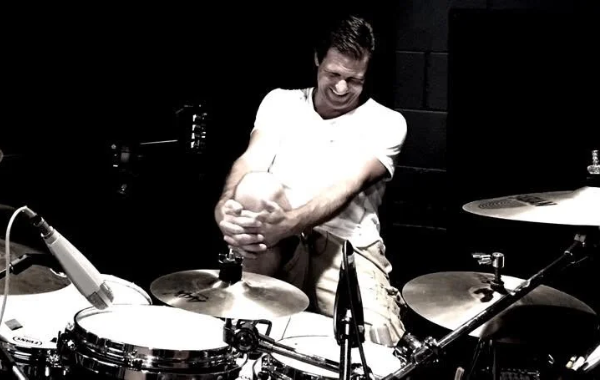
From an unexpected opportunity at EMI Publishing to recording with Nashville’s finest and touring with Clint Black, drummer Andy Hull has spent more than three decades proving that great musicianship is about more than keeping time. It’s about listening, adapting, and knowing when to let the music do the talking.
There’s something special about walking into a recording studio and seeing a familiar face behind the drum kit.
Especially when that face belongs to Andy Hull.
I’ve worked with a lot of drummers throughout my career, and I’ve always believed that a great drummer can make or break a recording session. It’s not simply about keeping time. It’s about feel, dynamics, musical instincts, and understanding what a song needs before anybody has to explain it.
Andy has all of those qualities.
He’s also one of those musicians who makes the entire room better just by being there.
I’ve had the pleasure of working with him on numerous projects over the years, and I can tell you that when Andy was behind the kit, I never worried about the drums. I knew he would come prepared, deliver a great performance, and probably find a way to make everybody laugh along the way.
That’s an important combination in Nashville.
There are plenty of talented musicians in Music City. Some of them can play things that don’t even seem physically possible. But the musicians who build lasting careers are usually the ones who understand that being great at your instrument is only part of the job.
You also have to be somebody people want to spend twelve hours with.
Andy understands that better than most.
His career has taken him from the recording studios of Nashville to stages across the country, working with artists including Clint Black, Tanya Tucker, Lee Greenwood, and Jo Dee Messina. He’s also recorded songwriter demos for artists such as Chris Stapleton and developed a reputation as a dependable, versatile session drummer.
But his journey didn’t begin with a carefully calculated career plan.
It began with a failed audition, a college internship, and a drummer who didn’t show up for work.
And as Andy explained during our conversation, sometimes that’s all it takes to change your life.
A Failed Audition That Led to Nashville
Andy grew up in Chattanooga, Tennessee, with an interest in music that eventually led him toward a career behind the drums.
His original plan was to attend Berklee College of Music in Boston.
There was just one problem.
He couldn’t read traditional music notation.
Andy auditioned but didn’t make it into the program.
For some aspiring musicians, that might have been enough to discourage them from pursuing music professionally.
Andy took a different approach.
He went home and learned how to read music.
Then he started looking for another school.
Someone suggested Belmont University in Nashville.
That turned out to be a pretty good suggestion.
Andy enrolled at Belmont and began developing the skills that would eventually serve him throughout his career.
But once he arrived in Nashville, he discovered something interesting.
The music he’d spent so much time learning to read wasn’t necessarily the kind of chart Nashville musicians were using.
Instead, they relied heavily on the Nashville Number System.
For anyone unfamiliar with it, the Nashville Number System uses numbers to represent chords relative to the key of a song. It’s an efficient way for musicians to communicate arrangements and transpose songs without rewriting every chord.
For Nashville session players, it’s practically a second language.
For Andy, it initially looked like something entirely different.
He remembers sitting in a session, looking at a number chart, and wondering what he’d gotten himself into.
Fortunately, legendary bassist Michael Rhodes was there.
Rhodes noticed the expression on Andy’s face and realized what was happening.
Andy could read traditional notation.
He simply hadn’t learned how to interpret the Nashville charts.
Rhodes explained that the numbers represented the chord changes within the measures, while the rhythmic notation and other musical markings would still be familiar.
Suddenly, everything made sense.
Andy realized he could use the musical foundation he’d already developed.
He just needed to understand the new language.
It’s a small story, but it says something important about Nashville’s recording community.
A musician with Michael Rhodes’ experience could easily have ignored the nervous young drummer sitting beside him.
Instead, he took a moment to help.
And Andy never forgot it.
The Internship That Changed Everything
While attending Belmont, Andy began interning at EMI Publishing.
At the time, EMI was a major part of Nashville’s songwriting and publishing community.
And for a young musician trying to find his way into the business, it was an incredible place to learn.
Andy worked around songwriters, musicians, producers, and engineers.
He watched how recording sessions operated.
He learned the language of the studio.
And he began developing relationships with people who were already working professionally.
Then one morning, everything changed.
A drummer scheduled for a session failed to show up.
The session was supposed to begin at ten o’clock.
The musicians were there.
The engineer was ready.
Everybody was waiting.
But there was no drummer.
Andy was working as an intern when the engineer, Miles, pointed out that Andy played drums.
And just like that, the intern became the session drummer.
It’s the kind of opportunity musicians dream about.
Although Andy probably would have preferred a little more warning.
He stepped behind the kit and did the job.
That session led to another.
And then another.
Before long, Andy was receiving enough calls that he began questioning whether he needed to remain in college.
He’d spent two years at Belmont.
Now he was getting paid to do the very thing he’d gone to school to learn.
So he left.
Looking back, Andy admits he wishes he’d finished his degree.
But he also recognizes that the opportunity was too important to ignore.
The music business had opened a door.
And he walked through it.
There’s a lesson in that story that applies well beyond music.
Sometimes the most valuable opportunities don’t arrive with a formal invitation.
Sometimes they happen because you’re already in the room.
And when somebody needs help, you’re ready.
Right Place, Right Time Isn’t Enough
Andy is quick to acknowledge that luck played a role in his early career.
He happened to be at EMI when a drummer didn’t show up.
But luck alone wouldn’t have built a thirty-year career.
He still had to perform.
And after that first session, he had to give people a reason to call him again.
Andy remembers that work began increasing within months.
One session would lead to another because musicians and songwriters were constantly discussing upcoming projects.
Somebody might ask whether the players were available the following week.
Another songwriter might hear the results and want the same musicians.
And slowly, a professional network began forming.
Andy believes those relationships are essential.
His advice to younger musicians is to take internships and smaller opportunities seriously, even when they don’t seem particularly glamorous.
You never know who you’ll meet.
Or who might need a drummer at ten o’clock on a Tuesday morning.
Of course, there’s another side to that advice.
You have to be prepared before the opportunity arrives.
Knowing how to read charts, understanding studio etiquette, and being able to communicate with other musicians are all essential skills.
Because when the drummer doesn’t show up, nobody wants to hear that the intern needs another six months to get ready.
The Yellow Gretsch Kit
If you’ve ever worked with Andy, there’s a good chance you remember his drums.
I certainly do.
For years, Andy brought a distinctive canary-yellow Gretsch kit to recording sessions.
And I loved that kit.
Not because of the color, although it was impossible to miss.
Because of the sound.
It had a character that I immediately recognized.
When Andy walked into a session with that yellow kit, I knew exactly what we were getting.
A great drummer playing great drums.
The color was inspired by legendary jazz drummer Tony Williams, whose yellow Gretsch kit had made a lasting impression on Andy.
Andy was also a fan of Phil Collins, another drummer closely associated with Gretsch.
So the kit represented more than a particular sound.
It reflected some of his musical influences.
Unfortunately, the yellow finish didn’t survive life on the road.
Andy was touring with Tanya Tucker when the band arrived for a performance in South Dakota.
The temperature was approximately twenty-three degrees below zero.
That’s not a typo.
Twenty-three below.
At that point, I’d be less concerned about the drums and more concerned about whether my face was going to freeze.
The local crew unloaded Andy’s flight cases and brought them inside.
Normally, instruments that have been exposed to extreme cold need time to adjust to the warmer indoor temperature.
But the cases were opened immediately.
And the drums were exposed to the heat of the venue’s lighting.
Andy could actually hear the finish cracking.
The adhesive began separating from the shells.
And the beautiful yellow covering was ruined.
The kit eventually had to be recovered.
When Andy told me the story, I finally understood why the familiar yellow drums had disappeared from our sessions.
I remember being disappointed the first time he showed up with something different.
I hadn’t even heard him play yet.
I just missed those drums.
Fortunately, the kit itself survived.
And Andy still uses the snare drum from that original set.
He describes it as a deeper snare with a sound that musicians and producers continue requesting.
That’s one of the wonderful things about recording equipment.
A particular instrument can develop a reputation all its own.
And sometimes the sound becomes just as recognizable as the musician playing it.
From Gretsch to Airplane Aluminum
These days, Andy uses different equipment depending on whether he’s recording or performing live.
In the studio, he continues using Gretsch drums.
On the road with Clint Black, he plays a Trick drum kit.
And this one is a little different.
It’s made from aircraft-grade aluminum.
That’s right.
Andy went from worrying about a drum finish cracking in the cold to playing a kit built from material associated with airplanes.
The advantage is durability.
Metal shells aren’t affected by temperature changes in the same way wooden drums can be.
And when your equipment spends its life traveling in trucks, being loaded into venues, and exposed to everything from desert heat to winter temperatures, durability matters.
Andy appreciates that the Trick kit can handle those conditions without the same concerns he experienced with the yellow Gretsch.
It’s a practical choice.
And one that makes a lot of sense for a touring musician.
Why Andy Still Carries His Own Gear
One of the things I’ve always noticed about Andy is that he has never been afraid to handle his own equipment.
In Nashville, many busy session musicians use cartage companies to transport their instruments between studios.
It’s an incredibly valuable service.
Especially when a musician has a morning session at one studio and an afternoon session somewhere else.
A cartage company can pack up the equipment, transport it, and have everything ready before the musician arrives.
For drummers, that can save a tremendous amount of time.
But Andy has generally preferred to handle his own gear.
He admitted that some people viewed that choice negatively.
Apparently, carrying your own drums into a recording studio can create the impression that you haven’t quite reached a certain professional level.
Which is ridiculous when you think about it.
But perception can be a strange thing in the music business.
Andy pointed out that he’s worked alongside some of Nashville’s most respected musicians who still carry their own instruments and amplifiers.
And he doesn’t see anything wrong with it.
Today, many Nashville studios have house drum kits already set up.
That makes his job easier.
He can arrive with his preferred cymbals, snare drums, and percussion accessories, then customize the existing kit.
He also carries a Pelican case containing sticks, percussion instruments, a small mixer, and equipment for managing click tracks and loops.
It’s a compact system that allows him to work efficiently in different environments.
And efficiency is something every studio musician learns to appreciate.
Coffee First. Then Make Music.
When I asked Andy to walk me through a typical recording day, he started with the most important detail.
Coffee.
Before the drums.
Before the charts.
Before anything else.
He wants to know where the coffee is.
I can respect that.
Once he’s properly caffeinated, Andy begins preparing his equipment.
He adjusts the drum placement and cymbal angles.
Checks the tuning.
Organizes his accessories.
And makes sure his headphone mix is comfortable.
That last part is particularly important.
A drummer needs to hear the other musicians clearly.
The bass guitar.
The acoustic guitar.
The vocals.
The click track, when one is being used.
And enough of his own drums to understand how everything fits together.
Andy explained that he’ll often spend time adjusting the studio’s personal monitoring system before the session begins.
Sometimes the engineer sends test signals or previously recorded material so he can establish the balance.
As an engineer, I appreciate that kind of preparation.
Because the better a musician can hear, the better that musician can perform.
It’s a simple relationship.
But it’s amazing how often people overlook it.
Once everything is ready, Andy joins the other musicians in the control room to listen to the songs.
And that’s when the real creative process begins.
Building a Song From the Ground Up
One of the things I enjoy most about Nashville recording sessions is watching a song take shape.
Sometimes the artist arrives with a fully developed demo.
Other times, it’s nothing more than an acoustic guitar and a vocal.
And sometimes the producer has a very specific arrangement in mind.
Andy enjoys all of those situations.
He explained that the musicians typically listen to the song together before recording.
They discuss the arrangement.
The groove.
The dynamics.
And the overall direction.
Maybe the producer wants something traditional.
Maybe the artist is looking for a modern pop-country sound.
Maybe the song needs to begin quietly and build toward a powerful chorus.
Andy takes notes on his chart.
He writes rhythmic patterns.
Marks transitions.
And makes sure he understands where the arrangement is headed.
But he also knows that everything can change once the band starts playing.
A producer might decide the intro is too long.
An artist might want to repeat the final chorus.
A bridge that sounded great in the demo might need to be stripped down.
And a drum part that seemed perfect on paper might not work once the bass and guitars are added.
That’s the beauty of recording with experienced musicians.
Everybody brings ideas into the room.
And the arrangement develops through collaboration.
Andy doesn’t view himself as somebody who’s simply there to play whatever is written on the chart.
He sees himself as part of the creative process.
But he also understands that the artist and producer ultimately determine the direction.
That’s an important distinction.
Sometimes the Artist Is Right
Andy told me something that every experienced session musician eventually learns.
Sometimes an artist asks you to play something that you don’t think will work.
You hear the suggestion.
You imagine how it’s going to sound.
And somewhere in the back of your mind, you’re thinking that this might be a terrible idea.
But then you try it.
And suddenly, it works.
Andy admitted that he’s experienced that more than once.
A producer might request a different drum pattern.
An artist might want a particular fill.
Or somebody might suggest simplifying a part that Andy thought was already working.
Rather than arguing, he plays it.
Then everybody listens.
Sometimes the suggestion turns out to be exactly what the song needed.
Other times, the artist hears it and decides to return to the original approach.
Either way, the process moves forward.
Andy believes that’s part of being a professional musician.
You’re not there to prove that your idea is always the best one.
You’re there to help the artist create the recording they want.
He described it as a service industry.
And that’s an important way to look at it.
Because the recording doesn’t belong to the drummer.
It belongs to the song.
The Jeff King Problem
At one point, our conversation turned to guitarist Jeff King.
I’ve worked with Jeff for years, and he’s one of my favorite musicians.
He’s also one of the biggest practical jokers I’ve ever met.
Andy knows that firsthand.
He warned that you should never leave your chart unattended when Jeff is in the room.
Apparently, Jeff has been known to change the markings on another musician’s chart while that person is away.
Then the unsuspecting musician returns, follows the chart, and plays the wrong part.
Everybody else knows what’s happening.
Except the victim.
That’s Jeff.
And while that kind of joke might sound like a distraction, Andy sees a real benefit in having somebody like Jeff around.
Recording sessions can be stressful.
There are deadlines.
Budgets.
Expectations.
And sometimes a room full of people trying to solve the same musical problem.
A little humor can change the entire atmosphere.
Andy believes musicians play better when they’re comfortable.
And I agree.
I’ve seen it happen countless times.
When a session feels tense, musicians start overthinking everything.
But when everybody is relaxed and enjoying the process, the performances often become more natural.
That’s one of the reasons Jeff gets hired.
He’s a phenomenal guitarist.
But he’s also somebody people genuinely enjoy being around.
And Andy is very much the same way.
Big Studios, Small Rooms, and the People Who Matter
I asked Andy whether he had a favorite recording studio.
His answer surprised me a little.
He didn’t really have one.
He’s worked in some of Nashville’s most respected facilities, including Ocean Way and Blackbird Studio.
He appreciates the quality of those rooms.
The equipment.
The acoustics.
And the experience of recording in a world-class facility.
But he also loves smaller studios.
He remembered recording at EMI before the facility was renovated.
He talked about House of David, a studio built around the character of an older home.
And he remembered Bennett House in Franklin, where musicians sometimes recorded in rooms that still looked like somebody’s dining room.
He loved those environments.
Not because they were technically superior to the larger studios.
But because they had personality.
And because great music could happen anywhere.
That struck a chord with me.
I’ve worked in some extraordinary recording facilities throughout my career.
But one of my favorite studios was a small sixteen-track room in Boston called ESS Studios.
It wasn’t the biggest.
It wasn’t the most expensive.
And it certainly didn’t have all the equipment you’d find in Nashville’s premier rooms.
But the people were great.
The atmosphere was comfortable.
And we made music that mattered.
Andy understood exactly what I meant.
The room itself is only part of the equation.
The engineer makes a difference.
The musicians make a difference.
And the atmosphere makes a difference.
Sometimes the most memorable recordings happen in places that wouldn’t impress anybody looking at a brochure.
The Road Versus the Studio
For much of his career, Andy has balanced recording sessions with live performances.
But he explained that the relationship between those two worlds hasn’t always been easy.
When he first started working in Nashville during the early 1990s, there was a noticeable separation between session musicians and touring musicians.
If you were known as a studio player, people expected you to remain available for sessions.
If you spent too much time on the road, you risked losing those relationships.
And if you became known primarily as a touring musician, breaking into the recording community could be difficult.
Andy learned that firsthand.
He took touring opportunities because he loved performing live.
But when he returned to Nashville, he sometimes discovered that the session calls had slowed down.
Not necessarily because anybody was unhappy with his playing.
Simply because he’d been unavailable.
And in Nashville, availability matters.
If a producer calls you several times and you’re always out of town, eventually that producer finds somebody else.
That’s the reality of the business.
Andy still enjoys both environments.
But if he had to choose, the studio would win.
He loves the creativity.
The process of building something from scratch.
The challenge of finding the right part.
And the satisfaction of hearing a recording come together.
Live performances offer something different.
Energy.
Immediate audience response.
And the excitement of playing songs in front of thousands of people.
Andy appreciates both.
And these days, he’s found a way to balance them.
Life Behind the Drums With Clint Black
At the time of our conversation, Andy had been performing with Clint Black for approximately two years.
And he couldn’t have been happier with the experience.
He described Clint as a wonderful artist to work with.
Professional.
Talented.
And very clear about what he wants musically.
Andy also had tremendous praise for the band and crew.
He talked about the quality of the production, the organization of the touring operation, and the people who make everything happen behind the scenes.
For a musician who’s spent years hauling his own equipment into recording studios, there’s something pretty nice about arriving at a venue and finding the drum kit already assembled.
Everything positioned correctly.
Everything ready.
All he has to do is sit down and play.
That’s not a bad arrangement.
Andy also appreciates the travel accommodations.
The band generally travels by bus when practical and flies when the distances require it.
And while a tour bus might sound glamorous, Andy described it in terms that every touring musician understands.
It’s basically a rolling hallway.
There are bunks.
Lounges.
Televisions.
And enough space to make life comfortable.
But it’s still a narrow vehicle traveling down the highway while you’re trying to sleep.
Andy prefers the bus for many trips because he can relax and sleep in his bunk.
Although there are occasional drawbacks.
Like waking up in the middle of the night and hitting your head on the television.
Or hearing the tires cross rumble strips and wondering whether the driver is navigating construction.
Or whether something has gone terribly wrong.
Those are the moments nobody includes in the tour brochure.
Clint Black Knows Exactly What He Wants
One of the things Andy appreciates most about working with Clint Black is the artist’s musical knowledge.
Clint understands arrangements.
He knows how to communicate what he wants.
And he’s particular about the way his songs are performed.
When Andy joined the band, he was stepping into a position previously held by a drummer who had been with Clint for decades.
That meant learning more than just the songs.
He needed to understand the musical details Clint had become accustomed to hearing.
Specific grooves.
Transitions.
Drum fills.
And the subtle cues that help an artist navigate a live performance.
Andy explained that there was a period of adjustment as he and Clint learned how to work together.
But he welcomed the process.
He likes working with artists who know what they want.
Because when expectations are clear, everybody can focus on delivering the best performance.
And that led us into one of my favorite stories from the conversation.
Why a Drum Fill Can Be More Than a Drum Fill
Andy recalled performing several shows with Jo Dee Messina.
Before the performances, he’d prepared charts and learned the songs from live recordings.
He’d been told that he could play drum fills wherever they seemed appropriate.
So that’s what he planned to do.
But during soundcheck, Jo Dee explained that she wanted certain fills played exactly as they appeared in the reference recordings.
Andy initially wondered why those details mattered so much.
Then she explained.
When she’s performing, she’s interacting with the audience.
She’s moving around the stage.
Talking.
Connecting with people.
And sometimes she’s not consciously counting every measure of the arrangement.
Instead, she listens for musical cues.
A familiar drum fill might tell her that the second chorus is ending.
Or that the bridge is about to begin.
Or that it’s time to prepare for the next section.
Change the fill, and you might remove the cue she’s relying on.
Suddenly, Andy understood.
The drum part wasn’t simply an opportunity for the drummer to express himself.
It was part of the communication system between the musicians and the singer.
That’s a fascinating detail that most concertgoers would never notice.
But it makes perfect sense.
And it illustrates something important about professional musicianship.
Sometimes the best performance isn’t the most creative one.
It’s the one that gives the artist exactly what they need.
Learning to Be Uncomfortable
Andy offered another piece of advice that I think every aspiring musician should hear.
Learn to be comfortable in uncomfortable situations.
It’s easy to play well when everything is perfect.
Your equipment is set up exactly the way you like it.
The monitor mix sounds great.
You’ve had plenty of rehearsal time.
And everybody knows the arrangement.
But professional musicians don’t always get those conditions.
Sometimes you walk into a venue and have thirty seconds to get ready.
Sometimes the drums are set up differently.
Sometimes the monitor mix isn’t ideal.
And sometimes you simply have to sit down and play.
Andy pointed to the Grand Ole Opry as a perfect example.
The Opry operates on a tight schedule.
One artist finishes.
The next artist comes on.
And there may be almost no time to adjust the equipment.
Andy described occasions when he’d step behind the kit after legendary drummer Eddie Bayers.
Bayers plays open-handed, which means his setup differs from the traditional crossed-hand approach used by many drummers.
That can affect cymbal placement and other details.
Andy might have only seconds to adjust the snare drum before the next song begins.
And apparently, Eddie enjoys talking and joking during those precious seconds.
Which is great.
Unless you’re trying to get ready to play.
Andy laughed about the experience, but the lesson was serious.
You can’t always control the environment.
You can only control how you respond.
And if you want to work professionally, you need to be able to perform even when things aren’t exactly the way you’d prefer.
From Two-Inch Tape to Pro Tools
Andy and I also spent time talking about recording technology.
And this is where our shared studio background made the conversation especially entertaining.
When Andy first started interning at EMI, recording was still very much an analog process.
Two-inch tape machines.
Large-format consoles.
Physical editing.
And all the little rituals that came with operating a professional recording studio.
Andy wasn’t just learning to play sessions.
He was also learning how the recording process worked from the engineering side.
He remembered the engineer, Miles, making him align the tape machine.
Every day.
Andy later discovered that the machine didn’t necessarily need that much attention.
But Miles wanted him to learn the process.
And he did.
Andy also learned how to edit tape.
Which is an entirely different experience from editing audio on a computer.
Today, if you make a mistake while editing a recording, you can usually hit Undo.
Problem solved.
But when you’re cutting analog tape with a razor blade, things get a little more exciting.
Andy remembered being terrified while making edits on recordings involving major artists.
He mentioned working with material associated with artists such as Emmylou Harris and Billy Dean.
And the thought of making an incorrect cut was enough to make him nervous all over again.
I understood completely.
I started in the days of analog tape myself.
And while I appreciate the convenience of modern recording technology, there’s something about those old machines that stays with you.
The sound of tape rewinding.
The mechanical movement.
The feel of working with a physical recording medium.
Even the smell.
Andy misses those things too.
But neither of us is particularly interested in giving up Pro Tools and going back.
Nostalgia is wonderful.
So is the Undo button.
Learning Technology One Tutorial at a Time
Andy admitted that he was initially intimidated by computer-based recording.
He didn’t consider himself particularly comfortable with technology.
And the idea of learning recording software seemed overwhelming.
But eventually, he realized that the tools could make his life easier.
Friends encouraged him to learn.
And he began exploring Pro Tools.
He also discovered something that musicians today have available in abundance.
Online tutorials.
Andy laughed about the fact that people who spent years studying engineering are now sharing their knowledge for free on YouTube.
And he’s happy to take advantage of it.
Today, Andy records drums from his home studio.
He can receive tracks from artists or producers, create drum parts, and send the recordings back.
He can also build loops and experiment with ideas without needing to book time in a commercial studio.
That flexibility has become an important part of his work.
And it allows him to continue doing what he loves most.
Creating music.
He jokingly told me that he isn’t a real engineer.
But he can handle enough of the process to get the job done.
And frankly, that’s a valuable skill.
Because today’s musicians often need to understand much more than their instruments.
They need to be comfortable with recording software, file management, digital communication, and remote collaboration.
The industry has changed.
And Andy has adapted.
A New Generation of Musicians
One of the more personal parts of our conversation involved Andy’s son, Evan.
At the time of the interview, Evan was twenty-one and already developing a career as a professional musician.
He’s an electric guitarist who works on jingles, recording sessions, and live performances.
Andy mentioned that Evan had been performing with T.G. Sheppard and had also worked with Lee Greenwood.
The two have even recorded together.
But Evan’s abilities extend beyond guitar.
He also plays keyboards, bass, and drums.
Which Andy finds mildly irritating.
Not because he isn’t proud of his son.
Quite the opposite.
He’s clearly impressed.
But Andy jokes that musicians who can move effortlessly between multiple instruments are difficult to understand.
He’s wired to play drums.
And that’s enough for him.
Evan, apparently, didn’t get that memo.
Andy also appreciates that his son understands modern recording technology.
Evan works with Logic Pro and Pro Tools, builds tracks, and handles many aspects of production.
It’s a different approach from the recording environment Andy entered in the early 1990s.
But it represents the same fundamental goal.
Making music.
And there’s something wonderful about watching a new generation develop its own way of doing that.
The Saxophone Player Who Became a Drummer
Of course, Andy didn’t originally set out to become a drummer.
He wanted to play saxophone.
When he was in middle school, he approached the band director about learning the instrument.
The director handed him a saxophone and asked him to try producing a sound.
Andy gave it his best effort.
It didn’t go particularly well.
So the director made an executive decision.
Percussion.
That’s where Andy was going.
Andy wasn’t thrilled.
He didn’t even particularly like drums at the time.
But he started learning.
And eventually, something clicked.
The instrument he hadn’t wanted became the one he loved.
I found that story especially entertaining because I’ve always struggled with the independence required to play drums.
I can understand what my hands are supposed to do.
And I can understand what my feet are supposed to do.
But getting all four limbs to cooperate is an entirely different problem.
Andy, naturally, had a simple solution.
Practice.
Thanks, Andy.
I’ll get right on that.
But his point was valid.
The coordination, independence, and musical instincts that great drummers develop don’t happen by accident.
They come from years of repetition.
Listening.
And learning how to make complicated movements feel natural.
And Andy has spent most of his life doing exactly that.
Unsung Heroes: The People Who Make the Show Possible
Every interview I conduct includes a segment called Unsung Heroes.
It’s an opportunity to recognize somebody who works behind the scenes and doesn’t always receive the credit they deserve.
When I asked Andy who he’d like to recognize, he didn’t choose one person.
He chose an entire group.
The crews.
Every road crew member.
Every drum technician.
Every guitar technician.
Every monitor engineer.
Every front-of-house engineer.
Every lighting technician.
Every stagehand.
And every person responsible for making a concert happen.
Andy spoke with genuine admiration for the men and women who work behind the scenes.
He explained that musicians get to walk onstage and look like rock stars because somebody else has spent hours preparing everything.
The equipment is ready.
The lights are hanging.
The sound system is operating.
The stage is built.
And the entire production is functioning because of people the audience may never notice.
Andy also talked about the riggers who work high above arena floors installing lighting and production equipment.
He remembered watching a woman move confidently across an elevated rigging structure, secured by a harness, while working high above the stage.
Andy was amazed.
And absolutely certain he had no interest in joining her.
I could relate.
Years ago, while working with the Nashville Predators, I was given a tour of the arena.
At one point, we were invited to walk across an elevated catwalk.
I made it about five steps.
Then I decided I’d seen enough.
I’ll take the recording console, thank you very much.
Andy laughed because he’d had essentially the same reaction.
But underneath the humor was genuine respect.
Those workers perform difficult, physically demanding jobs that require tremendous skill.
And without them, the show doesn’t happen.
Andy also made a point of recognizing engineers.
The people behind the consoles.
The people capturing and shaping recordings.
The people responsible for making the music sound the way audiences expect it to sound.
Some of them prefer staying out of the spotlight.
But their contributions are essential.
Andy believes those people deserve recognition.
And I couldn’t agree more.
The Music Is Supposed to Be Fun
As our conversation came to an end, I found myself thinking about something Andy had said earlier.
Music is supposed to be fun.
It sounds obvious.
But after decades in the business, I’ve seen how easily people forget it.
Recording sessions can become stressful.
Tours can become exhausting.
Deadlines can make creativity feel like work.
And sometimes musicians become so focused on perfection that they forget why they started playing in the first place.
Andy hasn’t forgotten.
He still gets excited about playing.
He enjoys soundchecks.
He enjoys recording.
He enjoys being around other musicians.
And he genuinely appreciates the people who help make those experiences possible.
That attitude has served him well.
He’s worked with major artists.
Recorded in legendary studios.
Performed on important stages.
And built a career that has lasted more than three decades.
But he still approaches the job with curiosity.
He still listens to other musicians.
He still learns.
And he still believes that being kind to the people around you is one of the most important things you can do.
That’s not complicated advice.
But it’s surprisingly effective.
More Than a Drummer
Near the end of our interview, I told Andy something I’ve believed for years.
Of all the drummers I’ve worked with throughout my career, he’s my favorite.
And I meant it.
Not simply because he’s a great drummer.
Although he absolutely is.
But because of the complete package.
His musicianship.
His professionalism.
His attitude.
And the way he makes recording sessions feel like something everybody gets to enjoy rather than something everybody has to survive.
Andy thanked me.
Then, naturally, we joked that he’d paid me fifty dollars to say it.
That’s Andy.
Even a sincere compliment isn’t safe from a little humor.
But the truth is that musicians like Andy Hull are the reason I’ve always loved working in recording studios.
There’s a special kind of chemistry that develops when talented people come together, respect one another, and focus on making something great.
The producer brings the vision.
The engineer captures the sound.
The musicians bring the song to life.
And somewhere in the middle of all that, the magic happens.
Andy understands his role in that process.
He’s not there to play the most complicated drum fill.
He’s not there to impress everybody with his technical ability.
He’s there to give the song what it needs.
Sometimes that means playing something simple.
Sometimes it means following a very specific arrangement.
Sometimes it means adjusting to an unfamiliar drum kit with only seconds to prepare.
And sometimes it means sitting behind a set of drums in a Nashville studio, drinking coffee, listening to a song for the first time, and helping turn somebody’s idea into a finished recording.
That’s what Andy loves.
And after all these years, it’s still what keeps him coming back.
His story began with a saxophone that didn’t work out, a failed college audition, and an unexpected opportunity at EMI.
It continued through countless recording sessions, tours, friendships, and lessons learned along the way.
And today, whether he’s behind the kit with Clint Black or recording drums from his home studio, Andy is still doing what he set out to do.
Making music.
The right way.
With the right people.
And preferably with a good cup of coffee nearby.
Because some things in Nashville never change.
And when Andy Hull is behind the drums, that’s a very good thing.