
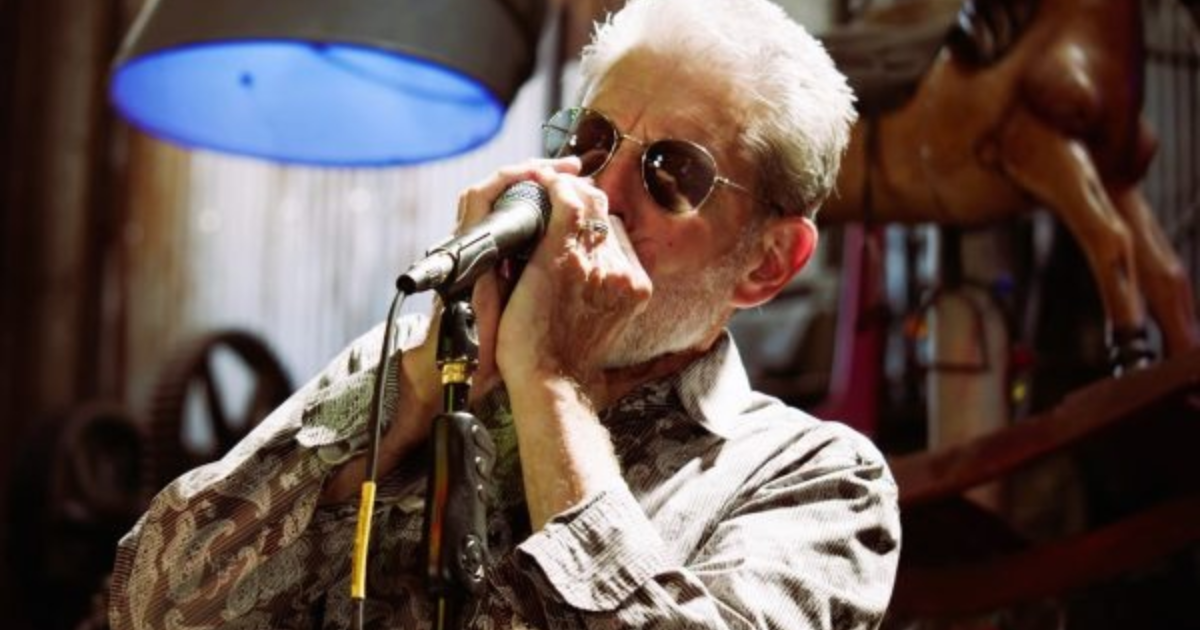
Christopher Wyze has been spending a considerable amount of time in cemeteries, archives and alleys around Indianapolis.
Not exactly the typical promotional schedule for a blues recording artist.
But Wyze isn’t simply promoting a new album.
He’s investigating a nearly century-old musical mystery.
He’s tracking down forgotten addresses, studying newspaper clippings, examining original recording contracts and visiting places connected to two musicians who helped shape the blues long before most people had heard of Robert Johnson.
Their names were Leroy Carr and Scrapper Blackwell.
And although they once sold an extraordinary number of records, their contributions to American music have largely faded from public memory.
Wyze wants to change that.
His latest album, Naptown Blues, celebrates their music while introducing a new generation of listeners to the stories behind it.
And for a man who only began seriously writing songs a few years ago, Christopher Wyze has developed a remarkable ability to turn an interesting idea into a full-scale musical adventure.
He’s recorded in Mississippi.
Worked with Al Green’s legendary Hi Rhythm Section in Memphis.
Built records in Muscle Shoals.
Earned recognition from Blues Blast Magazine.
And now he’s making music inside a former Indianapolis post office while researching the lives of two musicians whose records helped influence the blues we know today.
Some artists spend their careers trying to make history.
Wyze seems equally interested in making sure we don’t forget it.
A Return Customer With Another Story
Christopher Wyze isn’t a stranger to my show.
We’ve talked before, and I knew going into this conversation that we’d have plenty to discuss.
What I didn’t anticipate was how far we’d travel through American music history without leaving our respective chairs.
We started with recording studios.
Moved into analog tape.
Visited Memphis and Mississippi.
Took a detour through Muscle Shoals.
And eventually found ourselves discussing a stolen Hupmobile, a bootlegger with a guitar and an old recording contract buried in an archive.
That’s the thing about Wyze.
Ask him a question about recording an album, and there’s a reasonable chance you’ll end up learning something about a musician who died 90 years ago.
And somehow, it all connects.
From Advertising Deadlines to Blues Records
Wyze’s path into the recording industry isn’t exactly conventional.
He grew up in Evansville, Indiana, and spent much of his professional life working as a writer.
Newspapers.
Magazines.
Advertising.
Books.
Five books, in fact.
He also owned an advertising agency.
So while plenty of musicians spend their early careers learning how to write songs, Wyze spent decades learning how to tell stories, meet deadlines and communicate ideas.
He just wasn’t doing it with a band.
That changed when he traveled to Clarksdale, Mississippi, to improve his harmonica playing.
Wyze had been performing in a blues cover band and wanted to become a better musician.
At a music camp, he met Ralph Carter, a songwriter and multi-instrumentalist who had previously worked with Eddie Money.
Carter encouraged him to start writing original music.
Wyze hadn’t seriously considered it.
He knew how to write.
But songs?
That was different.
Or maybe it wasn’t.
As he began experimenting, he realized something.
Writing a book might require tens of thousands of words.
A song could tell a complete fictional story in a couple hundred.
For a man accustomed to working within the constraints of advertising and journalism, that was liberating.
Suddenly he could invent characters.
Create situations.
Build stories that weren’t required to be literally true.
And he could do it in three or four minutes.
That’s a pretty efficient storytelling format.
The Wall Street Journal Started a Record
One day, Wyze came across an article in The Wall Street Journal about Ivy Manor, a recording studio in Muscle Shoals, Alabama.
The studio was housed in an old mansion.
It looked interesting.
So he took a picture of the article and sent it to Carter.
His suggestion was simple.
They should make a record there.
Wyze was mostly joking.
Carter wasn’t.
He told Wyze to start writing.
They’d make the album.
Suddenly Wyze had a deadline.
And if there’s one thing a former newspaper and advertising guy understands, it’s a deadline.
He began writing songs and traveled back to Mississippi with material for Carter.
What began as a casual suggestion became a recording project.
And that project eventually became Stuck in the Mud.
The album earned recognition as Best New Artist Debut Album from Blues Blast Magazine.
Not bad for someone who had barely begun writing songs.
The Record Deal That Almost Didn’t Happen
Here’s where Wyze’s story becomes particularly entertaining.
After recording the material, he wasn’t entirely sure what to do with it.
Through a National Songwriters Association mentoring connection, he met Nashville musician and producer Jim Riley.
Riley listened to the music.
He liked it.
He encouraged Wyze to release it.
Then Wyze told him he wanted a record label.
Riley advised against it.
Why not release the music independently?
Wyze wasn’t interested.
He’d worked with publishers throughout his writing career.
He understood the value of having experienced people handle the business side of creative work.
He wanted the same arrangement for music.
So Riley introduced him to Johnny Phillips, a member of the Phillips family associated with the legacy of Sun Records.
Before long, Wyze had a relationship with Big Radio Records.
I had to stop him during our conversation.
Because here’s a man who had only started writing songs a few years earlier, recorded an album almost on a whim and somehow landed a record deal.
Meanwhile, musicians around the world have been chasing that opportunity for decades.
Wyze laughed.
But he made an important point.
His entry into the music business might have been unusual.
His writing experience wasn’t.
He’d spent years developing the discipline necessary to communicate stories.
He simply applied that experience to a new medium.
That’s an important distinction.
Opportunity may arrive unexpectedly.
But experience has a way of making you ready for it.
Three Studios, Three Different Worlds
Wyze has developed an appreciation for recording in places with history.
Not necessarily because the equipment is better.
Modern professional studios can offer comparable technical capabilities almost anywhere.
It’s the atmosphere.
The feeling.
The environment.
And perhaps the knowledge of who made music there before you.
His recordings have taken him to Clarksdale, Memphis, Muscle Shoals and Indianapolis.
Each location offers something different.
In Clarksdale, Wyze recorded Live in Clarksdale at the Juke Joint Chapel at the Shack Up Inn.
That was a live performance rather than a traditional studio session.
There was an audience.
Cameras.
A show to deliver.
And the recording was happening around all of it.
Memphis was different.
That meant Royal Studios.
And an entirely different kind of musical history.
Recording With Al Green’s Rhythm Section
Royal Studios is closely associated with Willie Mitchell and the classic Memphis soul sound.
Today, Boo Mitchell continues that recording legacy.
For Wyze, the opportunity to work there came together through a series of connections that almost sounds too convenient to be true.
He’d met British blues singer Emma Wilson through people connected to his record label.
Wilson was planning a short American tour.
Wyze suggested they record a Christmas duet.
She agreed.
There was one problem.
She only had one free day.
September 25.
And she’d be in Memphis.
Wyze contacted Johnny Phillips.
Phillips connected him with Boo Mitchell.
Mitchell checked his calendar.
He was booked for weeks.
Except for one day.
September 25.
Sometimes the music business makes you work for every opportunity.
Other times, apparently, the calendar decides to cooperate.
Wyze and Wilson worked on the song with Ralph Carter.
They prepared a simple demo.
Then everyone arrived at Royal Studios.
Eventually.
Wyze, a former advertising executive accustomed to arriving on time, found himself waiting for the musicians and production team to assemble.
By noon, they still hadn’t really started.
And they had three songs to record.
Welcome to the recording business.
When the Groove Does the Talking
The session featured members of the Hi Rhythm Section, the musicians whose work helped define so many classic Al Green recordings.
Among them were bassist Leroy Hodges, organist Reverend Charles Hodges, keyboardist Archie Turner and drummer Steve Potts, along with guitarist Alina Beach.
Wyze had never worked with these musicians.
He was about to discover why experienced session players are worth their weight in gold.
They listened.
Found the feel.
And began playing.
One of the songs was “Christmas in Jail,” originally associated with Leroy Carr and Scrapper Blackwell.
The initial arrangement wasn’t going to work within their limited schedule.
So Wyze simplified it.
The musicians found a new approach.
And within minutes, the groove came together.
Wyze described listening to Leroy Hodges begin playing bass and realizing the song had found its direction.
That’s the magic of a great rhythm section.
You can spend hours explaining what you want.
Or you can put the right musicians in a room and let them communicate through their instruments.
Sometimes three minutes accomplishes more than three hours of discussion.
The Beauty of Recording on Tape
The Royal Studios recordings were made using analog tape.
Wyze loved the experience.
And that led us into a conversation about the days when recording required a little more physical effort.
I grew up working with two-inch analog machines.
My first studio in Boston had a 16-track machine.
There was something special about it.
The sound.
The smell.
The physical process of recording.
Of course, nostalgia tends to conveniently overlook the less romantic details.
Like aligning tape machines before sessions.
Or making an edit with a razor blade.
Or realizing the piece of tape you desperately need is somewhere in a pile on the floor.
Wyze laughed at that one.
Because, naturally, those problems always seem to happen around midnight.
We agreed that modern recording technology has made life considerably easier.
Neither of us is particularly interested in giving up the convenience of Pro Tools.
But there’s still something satisfying about capturing music on tape.
Especially when the goal is to make a record that feels connected to an earlier era.
Muscle Shoals and the House That Became a Studio
Wyze’s relationship with Muscle Shoals is equally interesting.
At Ivy Manor, the musicians don’t simply arrive, record and disappear.
They live together during the sessions.
The old mansion has bedrooms upstairs.
Recording spaces downstairs.
And an atmosphere that encourages people to keep making music long after the official session should have ended.
That can be enormously valuable.
Wyze remembers working on a song that wasn’t coming together.
Guitarist Eric Deaton, who has toured with the Black Keys, began experimenting with a different approach.
Suddenly the song made sense.
They returned to it the next morning and recorded it.
No complicated scheduling.
No waiting for another studio date.
Just musicians living in the same space and allowing ideas to develop naturally.
Wyze was preparing to return to Ivy Manor in November with Carter and several other musicians to begin another album.
For someone who entered the recording industry relatively recently, he certainly isn’t wasting time.
The Nashville Connection
Wyze has also begun writing music for television and film.
That opportunity came through Riley, the same Nashville producer who helped connect him with Johnny Phillips.
Riley reached out after hearing about Wyze’s progress.
Would he be interested in writing for film and television?
Wyze said yes.
That’s become something of a personal philosophy.
When an interesting musical opportunity appears, he tends to accept it.
Even when the deadline is ridiculous.
One early assignment required a song almost immediately.
Wyze received a brief synopsis of the film.
A few paragraphs.
He understood the story.
And began writing.
For a former journalist accustomed to producing material on deadline, the process felt familiar.
He worked with Carter, then traveled to the Nashville area to record.
He has since explored traditional country sounds as well, drawing on influences such as Johnny Cash and Ernest Tubb.
Nothing is guaranteed in film and television music.
A song can be requested without ever appearing in a finished production.
Wyze understands that.
But he enjoys the challenge.
And the work continues to create new opportunities.
Two Songs That Changed Everything
The Naptown Blues project began almost accidentally.
Wyze had already recorded “How Long, How Long Blues” during his Clarksdale performance.
Later, he and guitarist John Boyle recorded two additional Leroy Carr and Scrapper Blackwell songs for a film-and-television project.
The recordings sounded terrific.
And something clicked.
These weren’t simply old songs worth covering.
They were part of a musical history that deserved a closer look.
Carr and Blackwell were Indianapolis musicians.
Wyze was recording in Indianapolis.
The songs had originated there nearly a century earlier.
Why not make an entire album celebrating their work?
So they did.
And Wyze began researching.
Really researching.
The Forgotten Kings of Naptown
Leroy Carr and Scrapper Blackwell were major recording artists during the late 1920s and early 1930s.
Carr played piano.
Blackwell played guitar.
Both sang.
Together, they created an urban blues sound that differed considerably from the Delta blues most listeners associate with the era.
Indianapolis was a thriving city with an active entertainment district along Indiana Avenue.
There were clubs.
Restaurants.
Musicians.
And an energetic jazz-age culture.
Carr and Blackwell reflected that environment.
Their music wasn’t exclusively about hardship and despair.
Sometimes it was about romance.
Jealousy.
Money.
A woman who had walked away with the diamonds somebody bought her.
And the man who wanted them back.
Wyze described the music as having a certain city swagger.
I think that’s a pretty good description.
Their arrangements also had a different musical texture.
Carr’s piano could be melodic and rhythmically active.
Blackwell’s guitar provided intricate accompaniment.
Together, they created something sophisticated without losing the emotional directness of the blues.
It wasn’t the same musical world as a lone guitarist on a Mississippi porch.
It was city blues.
And it was enormously popular.
A Million Records in 1928
One of Wyze’s most remarkable discoveries involved the commercial success of “How Long, How Long Blues.”
The song became a major hit in 1928.
Wyze’s research indicated that it sold approximately one million copies.
Consider that for a moment.
This was 1928.
Record players were far less common than they would become in later decades.
The recording industry was still developing.
And Black artists faced enormous barriers to commercial opportunity.
Yet Carr and Blackwell achieved extraordinary sales.
Their success placed them among the most important blues performers of their time.
And today?
Many Indianapolis residents have never heard their names.
That’s what bothers Wyze.
Not because he expects everybody to become an expert in early blues.
But because these musicians helped shape an entire musical tradition.
And their hometown should know who they were.
Before “Sweet Home Chicago,” There Was “Kokomo Blues”
Here’s where the story gets particularly interesting.
One of the songs associated with Blackwell was “Kokomo Blues.”
Wyze included his own version on Naptown Blues.
The song carries a strong musical connection to Robert Johnson’s later recording of “Sweet Home Chicago.”
Wyze points out that Blackwell recorded “Kokomo Blues” years before Johnson’s famous version.
For Wyze, that connection illustrates something important.
Robert Johnson didn’t create his music in isolation.
He was part of a larger musical tradition.
He heard other musicians.
Absorbed their ideas.
And developed his own interpretations.
The relationship between “Kokomo Blues” and “Sweet Home Chicago” provides a fascinating example of how songs evolved and traveled through early blues culture.
Wyze finds it especially satisfying that the musical trail leads back to Indianapolis.
A city that doesn’t always receive the recognition it deserves in discussions of blues history.
A Bootlegger, a Train and a Recording Session
Blackwell’s early life provides plenty of material for a good story.
Before becoming a successful recording artist, he was involved in bootlegging.
According to Wyze’s research, Blackwell wasn’t initially eager to travel to Chicago to record music.
He had a business to run.
Eventually, a local record dealer helped arrange recording opportunities in Indianapolis.
In June 1928, recording equipment was brought to the city.
Carr and Blackwell recorded several songs, including the breakthrough “How Long, How Long Blues.”
The success launched them into the upper ranks of the blues recording business.
But the history isn’t neatly preserved.
There are gaps.
Conflicting details.
Missing photographs.
And very little firsthand information about their personal lives.
Which is precisely why Wyze has become so interested in finding it.
The Case of the Stolen Hupmobile
One of my favorite stories from our conversation involved a car.
Not just any car.
A Hupmobile.
An expensive automobile for its time.
Wyze discovered a newspaper report about Carr’s Hupmobile being stolen from outside his home.
The article included Carr’s address.
For most people, that would be a mildly interesting historical detail.
For Wyze, it was a lead.
He went to the location.
He wanted to see where Carr had lived.
Where the car had been parked.
What the neighborhood looked like.
Because suddenly Carr wasn’t simply a name on an old record label.
He was a person.
A successful musician.
A man who owned a nice automobile.
Who lived at a particular address.
Who experienced the same kinds of ordinary frustrations as anyone else.
That’s when music history becomes human.
Did Leroy Carr Spend Christmas in Jail?
Wyze also uncovered a newspaper story about a crackdown on drunken driving.
Among those arrested was Leroy Carr.
The incident occurred shortly before Christmas.
Carr and Blackwell recorded a song called “Christmas in Jail.”
Naturally, Wyze began connecting the dots.
Could the song have been inspired by Carr’s own experience?
Possibly.
Wyze is careful to acknowledge that he doesn’t know for certain.
But the timing is intriguing.
And the possibility adds another layer to the song.
Wyze recorded his own version of “Christmas in Jail” during the Memphis sessions.
He later adapted the arrangement into a new song called “Birthday in Jail.”
Same musical spirit.
Different occasion.
Apparently, if you’re going to spend your birthday behind bars, you might as well have a decent groove accompanying the experience.
The Story Took Over
What began as an album project gradually became something much larger.
Wyze started visiting gravesites.
Studying old newspapers.
Searching historical archives.
Examining photographs.
And tracking down locations connected to Carr and Blackwell.
He visited the alley where Blackwell was found after his murder in 1962.
He researched Carr’s death in 1935, when the pianist was only 30.
He learned about Blackwell’s long absence from the recording industry after Carr died.
And about the rediscovery that briefly brought Blackwell back into the spotlight.
The more Wyze learned, the more questions he had.
Why did Blackwell largely stop recording?
What happened during the missing years?
Who preserved the recordings?
What additional documents might still exist?
And why had so much of the story been forgotten?
Wyze began producing short historical videos connected to the project.
He wanted people to see the locations.
Understand the timeline.
And recognize the musicians as real individuals rather than distant names from music history.
Holding Scrapper Blackwell’s Signature
One discovery made a particularly strong impression.
During research at the Indiana Historical Society, Wyze found archival correspondence connected to Blackwell’s rediscovery.
Among the materials was an original record-label contract from 1960.
It carried Blackwell’s signature.
Francis Hillman Blackwell.
Scrapper Blackwell.
Wyze held the document in his hands.
For someone who had spent so much time listening to the records and studying the musician’s life, that was a powerful moment.
This wasn’t a reproduction.
It wasn’t a photograph on a website.
It was an actual document connected to the man whose music Wyze was recording.
A tangible piece of history.
And a reminder that behind every legendary recording is a real person who signed contracts, earned money, struggled with life and tried to make a living.
Blackwell’s comeback was tragically short.
He recorded again after years away from the spotlight.
Then, in 1962, he was murdered.
He was 59.
Wyze still wonders what music Blackwell might have made had he lived longer.
It’s a question nobody can answer.
But the recordings he left behind are enough to demonstrate why his story deserves attention.
Recording History Two and a Half Miles Away
The decision to record Naptown Blues at Postal Recording in Indianapolis was particularly appropriate.
The studio occupies a former post office dating to the 1930s.
It’s a remarkable space.
Large recording rooms.
Vintage equipment.
A substantial control room.
Even unusual acoustic features, including a tiled bathroom that can be used for recording.
The floor was salvaged from an old Ohio high school gymnasium.
And the building has a character that would be difficult to manufacture.
Wyze estimates the studio sits only about two and a half miles from where Carr and Blackwell made their first Indianapolis recordings.
He even joked that Blackwell’s mail might once have passed through the building.
It’s a charming possibility.
But the more important connection is musical.
Wyze was recording the songs of Indianapolis musicians.
In Indianapolis.
Inside a historic building.
With musicians who understood the significance of the material.
For him, that mattered.
The project wasn’t simply about reproducing old records.
It was about bringing the music home.
Respect the Originals, But Don’t Imitate Them
Wyze is clear about his approach to Carr and Blackwell’s music.
He respects the original recordings.
Deeply.
But he isn’t interested in pretending to be Leroy Carr.
His voice is different.
His musicians have their own styles.
The recording technology is different.
And the finished album reflects those realities.
That’s exactly how it should be.
There’s a difference between honoring a musical tradition and attempting to impersonate the people who created it.
Wyze chose the former.
John Boyle brought his guitar style.
Jerry Murphy contributed bass, including the rich sound of an acoustic bass guitar.
Wyze brought his voice, harmonica and storytelling instincts.
Together, they interpreted the songs as musicians working today.
Not as museum curators attempting to recreate 1928.
The result preserves the spirit of the original music while allowing the performances to breathe.
And that approach seems to be connecting with listeners.
A Blues Album for People Who Don’t Think They Like Blues
When we spoke, Naptown Blues had only recently been released.
Yet the early response was encouraging.
Wyze reported that the album had reached No. 7 on the Roots Music Report acoustic blues chart and No. 27 on its broader blues chart around the release period.
The rankings reflected radio activity.
But the reaction that seemed to excite him most came from listeners outside the traditional blues audience.
People who didn’t consider themselves blues fans.
People who heard the songs and found themselves tapping their feet.
Listeners who connected with the stories and melodies without necessarily knowing anything about the history.
That’s a significant accomplishment.
Because one of the challenges facing older musical traditions is the assumption that they belong exclusively to dedicated enthusiasts.
Wyze wants to demonstrate that these songs still have something to say.
You don’t need to understand the history of race records.
Or know the difference between Delta blues and urban blues.
Or recognize every musician who influenced Robert Johnson.
You can simply listen.
And enjoy the music.
Then, if you’re curious, the history is waiting.
Why the CD Still Matters
Wyze also made a deliberate decision to release the album on CD.
That might seem unusual in an industry increasingly dominated by streaming.
But he has practical reasons.
Traditional blues radio remains an important part of his promotional strategy.
According to Wyze, many broadcasters still prefer receiving physical CDs.
So his team distributes hundreds of copies to radio programmers around the world.
But there’s another reason.
The packaging gives him room to tell the story.
The Naptown Blues CD includes an extensive 24-page booklet.
Historical photographs.
Newspaper clippings.
Song lyrics.
Background information.
And details about Carr and Blackwell’s lives.
It’s part album.
Part history lesson.
Part archival tribute.
As someone who grew up appreciating liner notes, I understand the appeal.
There was a time when buying a record meant more than obtaining access to the songs.
You opened the package.
Read the credits.
Studied the photographs.
Learned who played what.
And discovered stories you might never have encountered otherwise.
Wyze has brought some of that experience back.
And for this particular project, it’s a perfect fit.
The Unsung Heroes Behind the Music
When you look at Wyze’s career, one name appears repeatedly.
Ralph Carter.
Carter encouraged him to begin writing original songs.
Helped him develop the material.
Collaborated on recordings.
And gave him the confidence to take an idea from a newspaper article and turn it into an album.
Then there’s John Boyle, Wyze’s longtime guitarist and musical collaborator.
Their working relationship has developed to the point where they can anticipate one another’s musical decisions.
That kind of chemistry doesn’t happen overnight.
Jerry Murphy has also played an important role in shaping the sound of the recordings.
And there are the people who opened doors.
Jim Riley.
Johnny Phillips.
Boo Mitchell.
The musicians who helped transform Wyze’s songs into records.
Although we didn’t conduct a formal unsung-hero nomination during this particular conversation, these are clearly some of the people whose contributions helped make the journey possible.
But there’s another pair of unsung heroes at the center of this story.
Leroy Carr and Scrapper Blackwell.
Not because they lacked recognition during their own careers.
They were successful recording artists.
They influenced other musicians.
They helped establish an important musical style.
But because their names have gradually slipped from the public conversation.
And Wyze is determined to bring them back.
The Writer Who Became a Blues Historian
There’s something wonderfully appropriate about the way Christopher Wyze’s career has developed.
He spent decades as a professional writer.
Then discovered songwriting.
That led him to Mississippi.
Muscle Shoals.
Memphis.
And a recording career he hadn’t originally planned.
But the writing never really stopped.
It simply changed form.
Now he’s using the research skills of a journalist.
The curiosity of a historian.
The storytelling instincts of an author.
And the musical enthusiasm of a blues performer.
All in service of the same project.
He wants to tell stories worth remembering.
Sometimes that means writing a new song.
Sometimes it means recording an old one.
And sometimes it means spending hours in an archive searching for a document nobody has looked at in decades.
More Than an Album
Near the end of our conversation, Wyze talked about how his relationship with Carr and Blackwell had changed.
Initially, he liked their music.
That was enough.
But after months of research, the musicians began feeling less like distant historical figures.
He’d seen where they lived.
Visited their graves.
Studied their contracts.
Learned about their successes.
And uncovered details of their tragedies.
He felt as though he knew them.
Not completely.
There are still enormous gaps in the historical record.
But enough to understand that their lives were more complicated than the few surviving photographs and recordings might suggest.
That’s what makes Naptown Blues more than a collection of covers.
It’s a personal attempt to reconnect a city with part of its musical heritage.
And perhaps introduce that heritage to listeners who never knew it existed.
The Next Chapter
Wyze isn’t finished.
He has more recording sessions planned.
More original songs underway.
More opportunities developing in film and television.
And more research to conduct.
I suggested that perhaps our next conversation should happen on location.
We live close enough to make that practical.
We could visit Postal Recording.
Explore the sites connected to Carr and Blackwell.
And let Wyze show me the places he’s spent so much time investigating.
He loved the idea.
And I have a feeling that by the time we get around to it, he’ll have uncovered another stack of newspaper articles and several more stories worth telling.
Because Christopher Wyze doesn’t seem particularly interested in slowing down.
Which is impressive considering how recently he started making records.
Keeping the Blues Alive
The most interesting thing about Christopher Wyze isn’t that he began his recording career later than many artists.
Or that he landed a record deal relatively quickly.
Or even that he’s recorded with some of the most respected musicians in American roots music.
It’s what he’s chosen to do with those opportunities.
He’s using his platform to celebrate musicians whose influence deserves greater recognition.
He’s treating their songs with respect without trying to imitate their performances.
He’s using modern recording technology inside historic spaces.
And he’s combining the instincts of a journalist with the enthusiasm of someone who simply loves the blues.
There’s a certain irony in all of this.
Carr and Blackwell helped shape the musical traditions that eventually influenced generations of artists.
Those traditions traveled around the world.
They changed.
Evolved.
Became part of rock and roll.
Soul.
Country.
And modern popular music.
Yet the musicians who helped build that foundation became increasingly unfamiliar to the general public.
Now, nearly a century later, another Indiana musician is bringing their songs back into the studio.
Not because somebody told him it would be commercially fashionable.
Not because it was part of a carefully calculated career strategy.
But because he heard the music.
Fell in love with the stories.
And couldn’t stop digging.
Christopher Wyze started this journey wanting to become a better harmonica player.
Somewhere along the way, he became a recording artist, a songwriter and an unlikely caretaker of Indianapolis blues history.
And that’s a pretty remarkable story.
The kind that deserves to be told.
Which, fortunately, happens to be exactly what Christopher Wyze does best.