
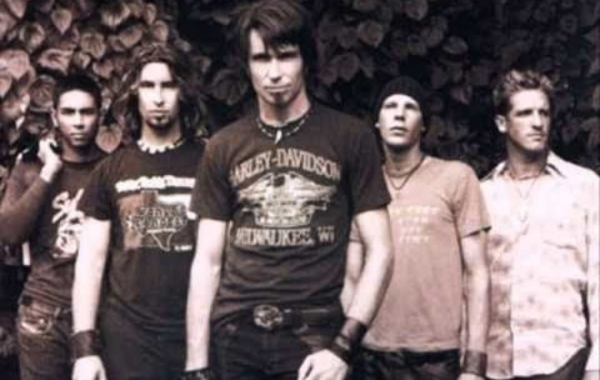
There are certain bands you remember because of a song.
Others because of a concert.
And then there are the bands you remember because you were there when the whole thing was happening.
For me, Vonray falls into that last category.
I knew Vaughn and Dave Ray long before the major-label record, the national tours, or the television appearance. I knew them when they were playing acoustic sets in Orlando clubs, building an audience one performance at a time, and doing the kind of work that rarely makes it into a band’s official biography.
I remember their mother working the merchandise table. I remember the nights at the Sapphire Supper Club. I remember sitting with Dave between sets while he worked on his bass.
And I remember watching a band that could barely get twenty people into a room become one of the hottest acts in Orlando.
So when I had the opportunity to sit down with the brothers again, it wasn’t exactly a typical interview.
It was more like opening a box of old photographs.
Except the photographs could talk.
And apparently, most of them had stories involving rock stars, recording studios, questionable decisions, and at least one memorable trip to the bathroom.
What emerged was more than a conversation about a band that signed with Elektra Records.
It was a story about family, friendship, ambition, the music business, and what happens when the dream you’ve spent years chasing finally comes true.
Especially when that dream doesn’t turn out quite the way you imagined.
Before the Record Deal, There Was Orange Avenue
To understand Vonray, you have to understand Orlando in the 1990s.
Today, people often associate the city with theme parks and tourism. But during that period, Orlando had a thriving original music scene.
Bands were playing everywhere.
Club owners were booking local talent.
Audiences were discovering new artists.
And record labels were paying attention.
Matchbox Twenty, Creed, Seven Mary Three, and Sister Hazel helped turn Central Florida into a destination for A&R representatives looking for the next breakthrough act.
But before Vonray became part of that conversation, Vaughn and Dave were simply two brothers making music.
Their earliest band efforts dated back to the early 1990s. There were different musicians, different configurations, and plenty of experimentation.
Vaughn spent time performing solo.
Dave played with other projects, including Blue Meridian and later Dust for Life.
Eventually, the brothers settled into an acoustic duo that became a familiar presence around Orlando.
One of their regular stops was Scruffy Murphy’s.
That’s where I first got to know them.
They weren’t playing to thousands of people.
They were playing to whoever showed up.
Sometimes the room was crowded.
Sometimes it wasn’t.
But the music was always worth hearing.
And that was the foundation of everything that followed.
The Sapphire Supper Club
When I asked the brothers which Orlando venue stood out from those early days, Dave didn’t hesitate.
The Sapphire Supper Club.
Located on Orange Avenue, the club became one of the defining venues of Orlando’s original music scene.
The room had character.
A large crushed-velvet curtain hung behind the stage.
The atmosphere felt like a place where something important might happen.
And frequently, something did.
The Sapphire eventually became known as The Social, but for those of us who spent time there during the 1990s, it will always be the Sapphire.
Vonray became a regular part of that world.
They were playing multiple shows each week, developing their sound, and building a loyal following.
Dave, who had studied journalism, handled much of the band’s promotional material.
He created elaborate performance calendars and wrote a newsletter called the Vonray Rag.
It was the kind of grassroots marketing that seems almost quaint today.
No social media algorithms.
No carefully timed Instagram campaigns.
Just a band making music and finding creative ways to convince people to come hear it.
And it worked.
Vaughn and the Three Daves
As the band’s sound developed, so did its lineup.
One memorable configuration featured Vaughn alongside three musicians named Dave.
Dave Ray.
Dave Tenney.
And Dave Smith.
Vaughn laughed as he remembered it.
It was Vaughn and the three Daves.
Before that lineup, other musicians had contributed to the band’s development, including guitarist Ben Tapia and drummer Kevin Kirkwood.
The personnel changed over time, but the relationship between the two brothers remained central.
That relationship was particularly interesting because Dave didn’t always stay with Vonray.
He pursued other musical opportunities.
He played in other bands.
He explored different creative directions.
And eventually, he returned.
Vaughn never seemed to view those departures as betrayals.
He understood that his brother needed room to develop.
In fact, he credited Dave with being one of the most creative people he’d ever known.
Their partnership worked because they inspired each other.
Sometimes without realizing it.
The Poetry That Became Music
One of the most revealing parts of our conversation concerned the brothers’ songwriting process.
In the earliest days, Dave wasn’t necessarily writing traditional songs.
He was writing poetry.
He would give the words to Vaughn.
Vaughn would find the melody.
Then the arrangement would begin taking shape.
One of those early collaborations was a song called “Shine.”
Dave remembered the satisfaction of hearing his words transformed into something musical.
A poem on paper had become a song people could experience.
Vaughn remembered it just as fondly.
He explained that the brothers continually fed each other’s creativity.
Dave’s lyrics inspired Vaughn’s melodies.
Vaughn’s musical ideas encouraged Dave to keep writing.
And together, they created songs that neither might have developed independently.
Some of that material never received a proper recording.
One song in particular, “Brothers,” remains important to both men.
Vaughn believes it deserves to be recorded.
Dave has a studio.
I have a mixing background.
Naturally, the conversation turned toward getting everyone together to finish some of those old songs.
Whether that happens remains to be seen.
But I wouldn’t mind getting my hands on those tracks.
Three Independent Albums and a Family History
Before signing with Elektra, Vonray released three independent albums.
And these weren’t simply rough demos thrown together to attract a record label.
They were legitimate recordings.
I still have my copy of Paynes.
Signed, incidentally.
When I held it up during our conversation, Vaughn seemed genuinely surprised.
He also explained something I’d never fully appreciated about the album.
It was a family project in more ways than one.
The photographs were taken in Tennessee, near places connected to the brothers’ childhood.
The lyrics came from several generations.
Dave contributed a substantial portion.
Their father wrote some.
Vaughn wrote others.
And one song drew from a poem written by their grandfather.
That detail changes how you hear the record.
It’s not simply a collection of songs by a young band trying to get signed.
It’s a collection of family voices.
Some written decades apart.
All brought together through music.
The recording process itself was considerably less romantic.
Vaughn remembered working in three or four different studios to complete the album.
Musicians came and went.
Tracks were recorded in different locations.
Engineer Tim Coons helped bring the material together.
It was technically challenging.
But the songs were already there.
And sometimes that’s the most important part.
When the Drinking Song Isn’t About Having Fun
One of the standout tracks from those early recordings was “Drinker’s Hour.”
I always liked that song.
Apparently, so did the Orlando audiences.
But Vaughn pointed out something amusing about its reception.
People would raise their drinks and celebrate whenever the band performed it.
The problem?
It wasn’t exactly a celebration of drinking.
The lyrics portrayed a man at the end of his rope.
It was dark.
Desperate.
And considerably more serious than the audience’s reaction suggested.
That’s one of the strange things about music.
A song can mean one thing to the person who wrote it and something entirely different to the people listening.
Sometimes audiences connect with the energy before they understand the lyrics.
Sometimes they never get beyond the chorus.
And sometimes a deeply troubling song becomes the perfect excuse to raise a glass.
Vaughn eventually made a music video for “Drinker’s Hour,” filming in Mount Dora, Florida, with help from a friend who worked in video production.
His children appeared in the video.
That made watching it an emotional experience for him.
The song had already been personal.
The video made it even more so.
The Album That Changed Everything
The independent album Fame became the turning point.
By then, Dave was working with Dust for Life.
Vaughn decided to record another album independently.
He teamed up with Brett Hestla, a musician associated with Virgos Merlot who also spent time performing with Creed.
The recording schedule was intense.
Vaughn remembered arriving at the studio around six in the evening.
And leaving around six the following morning.
Night after night.
For approximately two weeks.
Hestla handled much of the instrumentation, while Vaughn contributed acoustic guitar and vocals. Guitarist Chuck Shea also played on a couple of tracks.
The production was different from Vonray’s earlier records.
Vaughn described it as somewhat brittle compared with their previous work.
But the songs were strong.
And the record attracted attention.
Elektra Records became interested.
The label arranged to see the band perform.
And the brothers remembered one particular showcase at the Sapphire as a defining moment.
Dave had returned from the road.
The band was rehearsed.
The material was tight.
And the room had that feeling musicians spend their entire careers chasing.
Something was happening.
When Orlando Became the Place to Be
Dave described the Orlando music scene of that period as a specific combination of place and timing.
He doesn’t believe the same opportunities would necessarily have existed if the band had been based somewhere else.
The labels were already watching Orlando.
Success had created momentum.
And momentum attracted more attention.
A&R representatives were searching for another band that might follow Creed or Matchbox Twenty.
Vonray was in the right city at the right time.
But timing alone doesn’t explain what happened.
The audience had been growing long before the label arrived.
I remember seeing them at the House of Blues.
At Hard Rock Live.
At venues where the lines stretched around the building.
It seemed like an enormous leap from those early acoustic shows.
Vaughn remembered it differently.
To him, the growth felt gradual because he experienced it one show at a time.
First there were twenty people.
Then a few more.
Then the Sapphire started filling up.
Then the larger rooms.
Eventually, hundreds of people were waiting to buy merchandise and have albums signed.
They weren’t doing that because a major label told them to.
They were doing it because the music connected.
That’s a distinction worth remembering.
October 16, 2001
Vonray signed with Elektra Records on October 16, 2001.
Just over a month after the September 11 terrorist attacks.
Vaughn remembered the timing vividly.
The country was still reeling.
The entertainment industry was unsettled.
Business decisions were being reconsidered.
And yet, somehow, Vonray’s deal moved forward.
He considered it something of a miracle.
The timing also placed the band in the middle of another enormous transition.
The internet was changing the record business.
Napster had already disrupted the industry’s traditional model.
Digital music was becoming impossible to ignore.
But the streaming economy we know today hadn’t arrived.
Dave described it as a strange period.
Nobody seemed entirely certain what came next.
And Vonray was entering the major-label system just as that system was beginning to change.
It was an exciting time to sign a record deal.
It was also a complicated one.
The Part Nobody Puts in the Press Release
When I asked about the changes in Vonray’s lineup and sound after the signing, the conversation became more serious.
Vaughn admitted that his enthusiasm for the business began fading once the industry became involved.
There were decisions about personnel.
Questions about image.
Suggestions about which musicians should remain.
And pressure to make the band commercially competitive.
Some changes had started before the Elektra deal.
Vaughn recalled the difficult decision to part ways with drummer Dave Tenney, whom he considered one of Orlando’s finest players.
He believed age-related concerns had influenced that decision.
He still regretted it.
The brothers also spoke about the complicated process of balancing Dave’s education with the band’s professional opportunities.
At one point, Vaughn attended Dave’s graduation.
On top of his graduation cap, Dave had placed the Elektra logo.
Vaughn didn’t immediately understand what he was seeing.
Then it hit him.
His brother was marking the beginning of their next chapter.
The memory still moved him.
Because whatever difficulties had developed around the band, the connection between the brothers remained.
And that connection mattered more than any record contract.
The Difference Between a Band and a Product
This part of the conversation struck a familiar chord with me.
I’ve spent decades working in recording studios, and I’ve seen what happens when a band enters a major-label production environment.
The musicians who built the sound onstage aren’t always the musicians who appear on the record.
Sometimes producers bring in session players.
Sometimes the label wants a different sound.
Sometimes the people making those decisions genuinely believe they’re helping the artist.
And sometimes they are.
But that doesn’t mean the process is painless.
Vaughn and Dave both remembered the frustration of watching outside musicians take on parts they had developed themselves.
Bob Glaub, an accomplished Los Angeles session bassist, played extensively on the Elektra album.
Dave initially struggled with that decision.
He wanted to play his own parts.
Producer Mark Tanner explained that recording required a different level of consistency than live performance.
Dave eventually developed tremendous respect for Glaub.
He even played some parts using Glaub’s signature Lakland bass.
But that didn’t erase the disappointment.
Vaughn felt something similar.
He believed the finished record was strong.
He admired the musicians.
He respected Tanner’s ability.
But he also felt that some of the band’s original identity had been compromised.
That’s the contradiction.
You can appreciate the quality of the finished record while still wishing the process had been different.
Mark Tanner’s Recording Magic
Despite those frustrations, Vaughn had enormous respect for Tanner’s production skills.
And when he began describing the recording process at Cello Studios in Los Angeles, the engineer in me took over.
Tanner used a system that allowed him to assemble vocal performances from multiple complete takes.
Vaughn would sing a song four times.
The takes were identified as A, B, C, and D.
Tanner could then move between performances, selecting the strongest lines and phrases.
Vaughn remembered watching him switch from one take to another almost like he was playing an instrument.
It fascinated him.
Today, vocal comping is a routine part of digital recording.
We do it in Pro Tools.
But at the time, the technology was considerably more specialized.
Vonray’s sessions also used two-inch analog tape.
The drums, bass, and vocals were recorded through that process before being transferred into the digital production environment.
Guitars were handled differently.
The project existed at a fascinating moment in recording history.
Analog tape was still valued for its sound.
Digital editing was becoming increasingly powerful.
And producers were learning how to combine both approaches.
Vaughn emphasized that the record didn’t rely on Auto-Tune.
But it certainly benefited from meticulous vocal editing.
And hearing him describe the process reminded me how quickly recording technology has changed.
What once seemed almost magical is now something an engineer can do on a laptop.
Inside Cello Studios
The brothers recorded at Cello Studios in Los Angeles, a facility known for its extraordinary rooms and equipment.
They worked in the large studio with a Neve console.
Dave remembered the console’s enormous size.
Vaughn remembered the sound.
And both remembered the people walking through the building.
Tom Petty.
Flea.
Members of Stone Temple Pilots.
Weezer.
Wilco.
Audioslave.
Eric Clapton.
It was an extraordinary environment for a band that had spent years playing Orlando clubs.
Dave joked that he sometimes felt as though somebody was going to realize they didn’t belong there and ask them to leave.
Of course, they belonged there.
They were making a major-label record.
But I understand the feeling.
There’s something surreal about walking into a legendary studio and realizing the musicians you’ve admired for years are working down the hall.
Especially when you’re still trying to convince yourself that your own career is really happening.
The Tom Petty Story
Vaughn had several stories from those sessions.
One involved Tom Petty.
And a bathroom.
Apparently, Vaughn had just finished using the restroom when he noticed Petty heading in that direction.
So he turned around.
Went back upstairs.
And arranged to use the urinal next to him.
His entire conversation with Petty consisted of a casual greeting.
That was it.
No discussion about songwriting.
No career advice.
No profound exchange between musicians.
Just two guys standing in a bathroom.
One of whom was Tom Petty.
Vaughn considered the experience a success.
And I suppose, under the circumstances, it was.
The brothers also remembered meeting Flea and encountering Dean DeLeo of Stone Temple Pilots.
At one point, DeLeo approached them while they were looking at the studio’s collection of historic albums.
The moment left them stunned.
For musicians who grew up admiring those records, the experience was almost impossible to believe.
Eavesdropping on AC/DC
Another memorable encounter happened at a rehearsal facility in New York.
Vonray was preparing for the road.
AC/DC was rehearsing nearby.
Naturally, the brothers did what any reasonable musicians would do.
They stopped rehearsing.
Walked down the hallway.
And listened through the door.
Vaughn remembered being astonished by the power of Brian Johnson’s voice.
Even in rehearsal, Johnson was singing with the intensity of a live performance.
There was no conserving energy.
No casual run-through.
Just AC/DC doing what AC/DC does.
The brothers were standing outside the door, listening like fans.
Which, of course, they were.
A record deal doesn’t automatically make you stop admiring the musicians who inspired you.
Sometimes it just gives you access to a better hallway.
The Song That Still Hits Hard
One of my favorite moments in the interview came when we discussed “The Letter.”
That song has always stood out to me.
Particularly the low-end guitar sound.
There’s something aggressive about it.
Heavy.
Almost mechanical.
Like a train coming through the room.
Dave explained that the part was played on a Danelectro six-string bass guitar.
The instrument was tuned down, giving the arrangement a much heavier character than a conventional guitar part.
Vaughn remembered fighting to include a particular rhythmic accent.
He wanted the arrangement to hit hard before the next section.
The engineer initially resisted.
Vaughn kept pushing.
Eventually, they recorded the part the way he imagined it.
And it became one of the song’s defining moments.
I told the brothers that my daughter had even developed an appreciation for that particular section.
It’s one of those musical details that catches your attention every time.
Which is exactly why Vaughn fought for it.
Sometimes the smallest production decision becomes the part listeners remember.
Chris Lord-Alge and the Finished Record
The Elektra album was mixed by Chris Lord-Alge.
For anyone who has spent time in the recording industry, that name carries considerable weight.
Lord-Alge has been responsible for the sound of an enormous number of influential rock records.
And Vonray had the opportunity to work directly with him.
Vaughn remembered receiving finished mixes and taking them for a drive.
Elektra had provided him with a red convertible Mustang.
He would head down Pacific Coast Highway, listening to his own music through the car stereo.
Mixed by Chris Lord-Alge.
Recorded at Cello Studios.
Released through Elektra Records.
After years of playing small clubs, it was the kind of moment musicians dream about.
Vaughn also remembered Tanner and Lord-Alge presenting him with a cake when the project was finished.
A small gesture.
But one that marked the end of an enormous creative undertaking.
For a moment, everything seemed possible.
“Inside Out” and a Trip Into Smallville
Vonray’s single “Inside Out” became one of the band’s most recognizable songs.
It also found its way into the television series Smallville.
The band made an appearance on the show.
Dave described the experience as taking a field trip inside your television.
Vaughn had been a fan of the series.
Suddenly, he was standing on the set.
Meeting actors.
And discovering that television production looks considerably different when you’re standing behind the scenes.
He remembered meeting Tom Welling, who played Clark Kent.
Unfortunately, the encounter included a minor coffee incident.
Vaughn accidentally spilled a little coffee on Welling’s jeans.
Welling took it in stride.
Vaughn was mortified.
And then he noticed that Welling wore the same jeans during filming.
It’s the kind of moment that becomes funnier with time.
At the moment, however, I’m guessing Vaughn would have preferred a less memorable introduction.
From Orlando to the Rest of the Country
One of the most satisfying parts of Vonray’s success was watching the audience expand beyond Florida.
The brothers remembered touring through cities where they had no personal connections.
Then walking onstage and discovering that people knew the songs.
Portland.
Seattle.
Places far removed from the Orlando clubs where everything began.
For Vaughn, those moments were extraordinary.
It wasn’t simply that people had heard the music.
They knew the lyrics.
They connected with the songs.
They had developed their own relationships with the material.
I experienced a little of that transformation myself.
After leaving Orlando, I moved to New York and opened a recording studio.
Then I discovered Vonray was performing in Albany.
Naturally, I drove up to see them.
It was surreal.
The same guys I’d watched in Orlando were now touring nationally.
Playing to audiences who had discovered them independently.
It was one of those moments when you realize just how far someone has traveled.
Even if you still remember them sitting backstage trying to string a bass.
What Happens After the Spotlight Moves On?
Major-label careers rarely unfold exactly as planned.
And Vonray’s experience was no exception.
The brothers eventually moved into different chapters of their lives.
Dave pursued a career outside the music industry.
Vaughn stepped away from regular performing.
But neither lost his connection to creativity.
Dave became marketing director at Phillips Murrah, a law firm in Oklahoma City.
He described the position as one of the most rewarding jobs he’d ever held.
It allows him to use his creative skills in a professional environment where those abilities are genuinely valued.
And he’s still making music.
He’s writing songs.
Learning production techniques.
Recording in his home studio.
And collaborating with his children.
His son Campbell has become an accomplished drummer.
His younger son Cash is learning guitar.
Dave described walking into a room and discovering Cash playing Pink Floyd’s “Wish You Were Here.”
Naturally, he grabbed a guitar and joined him.
It’s a wonderful image.
A musician who spent years touring the country now making music at home with his sons.
Different stage.
Same connection.
Vaughn’s New Creative Obsession
Vaughn has found another artistic outlet.
Knife making.
Custom handmade knives, to be specific.
He spoke enthusiastically about designing and crafting them.
The process requires patience.
Precision.
An eye for detail.
And an appreciation for how individual elements come together to create a finished piece.
In other words, many of the same qualities involved in making music.
He also continues playing guitar at home and teaching young students.
That part of his life seems particularly rewarding.
Vaughn enjoys watching children discover music.
He understands that teaching isn’t simply about explaining where to put their fingers.
It’s about making them want to pick up the instrument again.
Helping them find something exciting in the process.
And giving them enough encouragement to keep going.
For someone who once stood on stages across the country, it’s a quieter kind of musical influence.
But not necessarily a less important one.
Miss Louise Comes Home
One of the most touching moments of our conversation involved an Ovation guitar.
Vaughn calls it Miss Louise.
The guitar had been part of his musical history for years.
Eventually, it became part of the Hard Rock Cafe’s memorabilia collection.
It hung on display in Orlando.
Later, it was moved to Atlanta.
Then it disappeared into storage.
Vaughn assumed he’d never see it again.
But his wife had other ideas.
For his 50th birthday, she managed to locate the guitar through a contact connected to Hard Rock’s memorabilia operation.
And she got it back.
Then she created a custom display incorporating photographs and memories from different periods of Vonray’s history.
The guitar.
The brothers.
Their father.
The early performances.
The journey.
All brought together in one piece.
Vaughn was visibly moved as he described it.
And I understood why.
It wasn’t simply about recovering an old instrument.
It was about reclaiming a piece of his life.
Something that had traveled through the same years, venues, and experiences that shaped him.
Something that represented far more than wood, strings, and electronics.
Music Is the Closest Thing We Have to a Time Machine
At one point, Vaughn said something that stayed with me.
He believes music is the closest thing we have to a time machine.
I think he’s right.
He explained that one of the songs connected to his family’s history began as a poem written by his grandfather in 1932.
Vaughn barely knew his grandfather.
He died when Vaughn was very young.
But when Vaughn hears that song, he feels connected to him.
The music allows him to experience something that existed long before he could understand it.
And now future generations of the Ray family will be able to listen to those recordings.
They’ll hear the voices.
The melodies.
The lyrics.
The emotions.
They’ll hear something their ancestors created.
That’s a remarkable thing.
And it helps explain why old recordings matter so much.
They’re not simply historical documents.
They’re emotional documents.
They preserve something that photographs and written words can’t always capture.
The feeling of a particular moment.
The energy of a performance.
The connection between people.
And sometimes, the sound of a family creating something together.
The Unsung Heroes
When I asked the brothers to recognize someone who had contributed to their success without receiving the attention they deserved, Dave remembered a mastering engineer named Trace.
Trace worked at Master Labs in Orlando.
During Vonray’s earliest years, he mastered the band’s recordings.
He helped give their independent releases the sound they needed.
The brothers remembered his unusual schedule.
Late nights.
Sessions that sometimes didn’t begin until after midnight.
And an unconventional personality that made every visit memorable.
But what mattered most was the work.
Vaughn explained that nearly everything the band distributed during those early years had passed through Trace’s hands.
Recordings sent to radio stations.
Material used to promote the band.
The music that helped create their reputation.
Trace had helped make it sound good.
And as someone who has spent a considerable amount of time behind recording consoles, I appreciate that recognition.
Engineers and mastering professionals are often invisible to the audience.
Their names may appear in the credits.
But most listeners never know what they contributed.
Yet their work can make the difference between a recording that merely exists and one that connects.
Trace was part of Vonray’s foundation.
And the brothers wanted him remembered.
Ma Ray
Then Vaughn named someone even closer to home.
Their mother.
Ma Ray.
I remember her well.
She was always there.
At the shows.
Around the merchandise.
Talking with people.
Supporting the band.
And doing whatever needed to be done.
The brothers explained that she eventually became their manager.
Not because she had some grand plan to become a music executive.
But because her sons needed someone who believed in them.
Someone willing to help.
Someone who would work just as hard as they did.
She stayed with the band through its early development and into the period when professional management began taking over.
And she helped create the confidence that allowed the brothers to pursue something bigger.
Dave also remembered a particularly important gift.
When he and Vaughn were living together, Vaughn was constantly playing guitar.
Dave was bored.
So their mother bought him a bass.
That simple decision changed everything.
It gave the brothers a way to make music together.
And it helped establish the partnership that would eventually become Vonray.
Later, Vaughn bought Dave another bass.
A five-string instrument.
I remember that bass.
I remember sitting with Dave at the Sapphire while he worked on it between sets.
During our conversation, Dave showed us the instrument.
It was still hanging on his wall.
Worn from years of use.
Not artificially distressed to look like it had been on the road.
Actually worn from being on the road.
There was something wonderful about seeing it again.
An instrument I’d watched him prepare for a show decades earlier was still part of his life.
And it all traced back to a mother who bought her son a bass so he could play music with his brother.
The Things That Stay With You
Toward the end of our conversation, the brothers began laughing about how much history we’d covered.
Old clubs.
Old friends.
Old recording sessions.
Musicians we’d known.
People we’d lost.
And stories we hadn’t thought about in years.
Dave joked that there was so much inside information that listeners might wonder what we were talking about.
He wasn’t entirely wrong.
But I think that’s part of what made the conversation special.
This wasn’t a carefully rehearsed promotional interview.
Nobody was trying to sell a new single.
Nobody was following a prepared list of talking points.
We were simply remembering a period of our lives when music was at the center of almost everything.
And we were discovering how much of it still mattered.
The brothers talked about their families.
Their careers.
Their creative interests.
And the ways music continues to connect them.
They also acknowledged that they don’t get to spend as much time talking face-to-face as they’d like.
Which made the reunion even more meaningful.
More Than a Record Deal
It’s easy to measure a band’s success by the usual milestones.
Did they sign a record deal?
Did they have a hit?
Did they tour nationally?
Did they appear on television?
Vonray accomplished all of those things.
But after spending time with Vaughn and Dave again, I don’t think those achievements tell the most important part of their story.
The real story began long before Elektra Records.
It began with two brothers.
A guitar.
A bass.
A mother who believed in them.
And a collection of songs that carried pieces of their family’s history.
It continued through Orlando clubs, recording studios, crowded concert venues, and the strange world of the major-label music business.
Along the way, there were extraordinary experiences.
And difficult decisions.
Moments of triumph.
And moments they still wish had happened differently.
But the music survived.
So did the relationship.
And perhaps most importantly, so did the memories.
Vaughn told me that music allows future generations to experience the emotions of people who came before them.
I keep thinking about that.
Because when I listen to those old Vonray recordings, I don’t simply hear the songs.
I remember the Sapphire.
The crowds.
The late nights.
The excitement of watching something grow.
I remember Ma Ray.
I remember the musicians.
And I remember two brothers who believed they had something worth sharing.
They were right.
The record deal was a chapter.
The music was the story.
And all these years later, it’s still being told.