
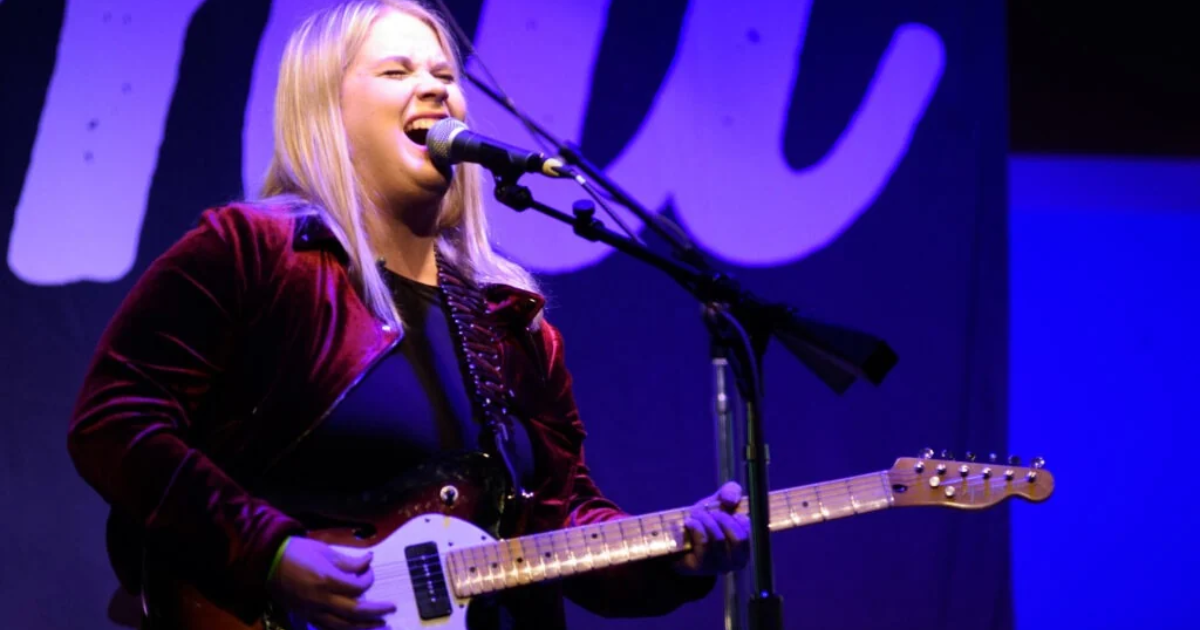
One weekend, you’re performing on a cruise alongside Nancy Wilson of Heart.
A couple of days later, you’re playing four hours in a smoky dive bar.
Welcome to the music business.
For Atlanta alternative rock band Hey Dreamer, that kind of contrast isn’t unusual. It’s simply another week in the life of a working musician.
There are amphitheaters, festival crowds, impressive stages and opportunities to open for established national acts.
Then there are questionable venues, unpredictable guarantees, long drives and hotel rooms where the primary requirement is that the door actually closes.
And somewhere between those extremes, there’s a band trying to build something meaningful.
When I sat down with Hey Dreamer’s Melody Kiser and bassist Dustin, I expected to talk about their music, their upcoming album and the opportunities they’ve been creating through their relationship with Collective Soul bassist Will Turpin.
We covered all of that.
But what stood out most wasn’t a particular performance or recording session.
It was their relationship.
Melody is the creative engine.
Dustin is the voice of reason.
She dreams big.
He asks practical questions.
She handles much of the songwriting and direction.
He keeps the operation grounded.
And apparently, he also knows how to pack a van.
Which, after enough years in this business, I can tell you is a skill that deserves considerably more recognition than it receives.
Together, they’re navigating an industry that demands musicians become businesspeople, booking agents, marketers, accountants and occasional amateur mechanics.
All while somehow finding time to make music.
And they’re doing it with an impressive amount of humor.
Atlanta Has More Than One Sound
When most people think about Atlanta’s music scene, hip-hop is usually the first genre that comes to mind.
Understandably.
The city has played an enormous role in shaping modern hip-hop and popular music.
But Melody and Dustin are quick to point out that Atlanta’s rock community deserves attention too.
Melody describes the scene as vibrant, diverse and supportive.
Dustin agrees.
He’s played with numerous groups throughout the city, working across different styles and spending plenty of time at local jams and open mics.
And Melody is convinced he’s played with practically every band in Atlanta.
Dustin insists that’s an exaggeration.
Although he admits the list is fairly long.
The important thing, they explain, is that Atlanta offers a strong community for musicians interested in original music.
There are clubs.
Listening rooms.
Small stages.
Large stages.
And enough variety that bands can find opportunities appropriate for their current level.
Neighborhoods such as Little Five Points and East Atlanta Village provide particularly active environments for independent artists.
And venues like Smith’s Olde Bar and Center Stage offer different performance spaces that allow bands to grow without necessarily leaving the local scene.
That’s something I appreciate.
A healthy music community needs more than one type of venue.
It needs places where new bands can develop.
Rooms where established regional artists can draw an audience.
And stages large enough to accommodate the next level.
Atlanta seems to offer that progression.
The Difference Between Playing Music and Being Background Noise
Of course, not every venue is built around the same experience.
Some places want live music.
Others want something making noise while customers eat, drink and watch television.
There’s a difference.
Dustin pointed to Eddie’s Attic as an example of a true listening room.
The expectation is simple.
People are there to hear the music.
If you’re talking through the performance or spending the evening distracting everyone around you, the venue takes that seriously.
Other rooms offer a more casual environment.
Smith’s Olde Bar, for example, combines dedicated performance spaces with the atmosphere of a traditional bar.
Both approaches have their place.
I’ve spent enough time in Nashville to appreciate a room like the Bluebird Cafe, where the audience understands that listening is part of the experience.
But I’ve also enjoyed plenty of shows in venues where the energy comes from the crowd, the bar and the occasional person who has clearly decided the evening is going considerably better than expected.
Hey Dreamer understands both worlds.
And they’ve learned that the room can make an enormous difference.
A Church in Kentucky
I first saw Hey Dreamer at The Southgate House Revival in Newport, Kentucky.
They were sharing the bill with The Summit and The Electric Indigo.
The venue is a restored church, complete with stained-glass windows and the kind of architectural character you don’t find in a generic black-box music club.
For a band traveling through unfamiliar cities, discovering a room like that can be a pleasant surprise.
Melody certainly thought so.
The show came together through a connection with The Summit.
Both bands record at the same studio in the Atlanta area.
Melody had gotten to know Chris and the other members of The Summit through that relationship.
When Hey Dreamer planned a summer run toward New York, the Kentucky show fit naturally into the schedule.
The Summit helped arrange the performance.
And Hey Dreamer arrived to discover a venue they genuinely loved.
That isn’t always how touring works.
Sometimes you pull up to a club and immediately begin wondering whether your vehicle will still be there when the show ends.
Melody has experienced that too.
Philadelphia apparently provided a few memorable moments.
But Southgate was different.
A beautiful room.
A strong bill.
And an audience there to hear music.
Not a bad night.
Booking a Tour Is Still a Contact Sport
At this stage, Hey Dreamer handles much of its own booking.
There’s no large agency coordinating every date.
No massive touring operation.
Melody does a considerable amount of the work herself.
And she’s learned something that every experienced musician eventually discovers.
Relationships matter.
A lot.
The best opportunities often come through people you’ve met along the way.
Another band.
A venue owner.
A musician who knows somebody in another city.
A friend who makes an introduction.
Cold calls can work.
But Melody has found that the strongest opportunities usually come through personal connections.
That’s how the Kentucky show happened.
And it’s how many of their other dates come together.
The music industry has changed dramatically over the years.
But one thing hasn’t.
People still prefer working with people they know, trust and enjoy being around.
And if you’re building a career independently, those relationships can become your most valuable resource.
The Band Before the Band
Hey Dreamer began as Melody’s project.
She formed the group around 2018 or 2019 and began searching for musicians who could help bring her songs to life.
The early lineup went through changes.
Different bass players.
Different drummers.
Different approaches.
Then Melody saw Dustin performing with another Atlanta band called The Sagas.
Something caught her attention.
He wasn’t simply playing bass.
He was helping lead the band from his instrument.
She liked that.
So she sent him a message on Facebook.
Would he be interested in joining Hey Dreamer?
He said yes.
That was near the end of 2019.
Which meant their new musical partnership was about to encounter a fairly significant obstacle.
The pandemic.
Nothing says welcome to the band quite like joining a project and immediately discovering the entire live music industry is shutting down.
But the relationship survived.
And over time, Melody and Dustin became the core of Hey Dreamer’s musical identity.
Melody Dreams. Dustin Does the Math.
Spend a few minutes talking with Melody and Dustin, and their dynamic becomes obvious.
Melody is enthusiastic.
Creative.
Ambitious.
And perfectly willing to chase an opportunity that sounds exciting.
Dustin is more measured.
He listens.
Evaluates.
And occasionally reminds her that something promising might not be quite as wonderful as it initially appears.
Melody calls him the band dad.
Dustin doesn’t particularly love the title.
But he admits it’s reasonably accurate.
He’s the person who helps keep things practical.
Melody describes him as her closest friend within the band and an important sounding board for major decisions.
Dustin, meanwhile, is quick to give Melody credit for the operation.
She’s the primary songwriter.
She develops the projects.
She handles much of the organizational work.
She drives the creative direction.
He says his job is mostly to help load the van.
And occasionally write a song.
I’m reasonably certain he’s underselling his contribution.
But every band needs somebody who understands how the equipment fits into the vehicle.
Trust me.
A Record Deal With a Collective Soul Connection
Hey Dreamer’s recording relationship developed through Real 2 Reel Studios and Real People Music in the Atlanta area.
One of the key figures is Will Turpin, bassist for Collective Soul.
Melody had already been working with Turpin and his earlier business partner, Steve Rawls, before Dustin joined the band.
Initially, the recordings were more experimental.
Melody and Turpin handled much of the instrumentation themselves.
They explored arrangements.
Built tracks.
And developed material.
That approach resulted in a full-length album released in 2022.
But afterward, Melody began thinking differently about the project.
She had assembled a band of talented professional musicians.
Why wasn’t she using them more extensively in the studio?
Dustin was an excellent bassist.
Why should Melody or Turpin be playing all the bass parts?
The next album became an opportunity to change that.
Instead of treating Hey Dreamer primarily as a recording project with musicians supporting the live shows, Melody wanted the recordings to reflect the band itself.
That distinction matters.
A Band Is More Than the People on the Stage
I asked Melody whether Hey Dreamer was truly a band or essentially a collection of hired musicians.
Her answer was interesting.
A little of both.
Everyone involved is a professional musician.
They have responsibilities.
Other work.
Other musical commitments.
And Melody makes a point of ensuring the musicians are compensated.
She doesn’t want to build a project by asking people to work indefinitely for the promise of future success.
At the same time, she doesn’t treat the lineup as interchangeable.
If Dustin can’t make a show, she isn’t necessarily interested in hiring another bassist and continuing as though nothing changed.
She’d rather decline the date.
That’s an important distinction.
A band develops chemistry through shared experience.
The musicians learn how to communicate.
How to anticipate one another.
How to respond when something unexpected happens onstage.
You can’t always replace that with a rehearsal and a competent substitute.
Even if the substitute is technically excellent.
Melody wants Hey Dreamer to feel like a real band.
And she understands that requires commitment in both directions.
Making Room for Real Life
Of course, keeping a professional band together isn’t simple.
Dustin works as a music director for a large music school in Atlanta.
His responsibilities include teaching and administration.
It’s a legitimate career.
One he can’t simply abandon because somebody offers the band a three-month tour.
The group’s drummer, David Williams, also has health considerations that can affect travel.
Other musicians have their own obligations.
So when the possibility of extended touring comes up, the band has to evaluate more than whether the dates look exciting.
Can everyone realistically participate?
Will the financial arrangement work?
What happens to the commitments waiting at home?
And is the opportunity worth the disruption?
That’s not a lack of ambition.
That’s professionalism.
One of the most common mistakes developing artists make is assuming every opportunity should be accepted simply because somebody offered it.
Sometimes the smarter decision is to wait.
Or find a better way to structure the work.
Opening for Collective Soul
The relationship with Will Turpin has helped create some remarkable opportunities.
Hey Dreamer has opened for Collective Soul and performed on larger stages in front of audiences numbering in the thousands.
For a developing band, those experiences are valuable.
Not simply because the crowd is bigger.
But because the entire production environment changes.
Larger stages.
Professional crews.
More sophisticated sound and lighting systems.
Different expectations.
Different schedules.
And an audience that may be discovering your music for the first time.
Melody appreciates those opportunities.
Dustin sees them as part of the band’s next phase.
Rather than playing every available local gig, he wants Hey Dreamer to become more selective.
Play fewer shows if necessary.
But make the shows count.
That’s a sensible strategy.
Because touring isn’t automatically productive just because the van is moving.
The Economics of the Road
Dustin made an observation that deserves attention.
The old idea of loading a van, driving around the country and gradually building a sustainable career through constant touring has become increasingly difficult.
Fuel costs money.
Hotels cost money.
Food costs money.
Musicians need to be paid.
And a small guarantee can disappear quickly when you divide it among everyone involved.
That doesn’t mean independent touring is impossible.
But it does mean artists need to think carefully about where they’re investing their time and money.
For Hey Dreamer, larger support slots and carefully selected regional shows are becoming more attractive.
They’re looking for opportunities that place the band in front of the right audiences.
Not simply opportunities that fill dates on a calendar.
I suggested that they might consider the touring model used by many country artists.
Work during the week.
Travel for shows on the weekend.
Return home.
That approach can reduce expenses while allowing musicians to maintain other professional commitments.
Dustin’s teaching position makes that particularly relevant.
The goal isn’t necessarily to spend more days on the road.
It’s to make the days on the road worthwhile.
The Melissa Etheridge Cruise and the Dive Bar
Melody offered one of the best illustrations of modern working-musician life.
Hey Dreamer had performed on the Melissa Etheridge Cruise.
They were sharing the experience with major artists, including Nancy Wilson.
A significant opportunity.
The kind of performance musicians dream about.
Then Melody returned home.
And almost immediately found herself playing a four-hour gig in a smoky dive bar.
That’s the business.
One day you’re sharing a bill with legendary performers.
The next you’re wondering whether the room has adequate ventilation.
And both performances are part of the same career.
It’s easy to look at photographs from a major show and assume an artist has reached some permanent new level.
But careers rarely move in a straight line.
Especially independent careers.
There are peaks.
Valleys.
Unexpected opportunities.
And plenty of nights that don’t look particularly glamorous on social media.
Melody understands that.
And she’s learned not to confuse one great show with a guarantee of future success.
The People Behind the Stage
One of the things I appreciated most about Melody was her enthusiasm for production crews.
She doesn’t simply remember the headlining artists.
She remembers the sound engineers.
Stagehands.
Production companies.
And the people responsible for making the show happen.
She enjoys getting to know them.
And she genuinely hopes those relationships lead to opportunities to work together again.
That’s a perspective I can appreciate.
I’ve spent most of my professional life on the production side of music.
And I’ve always found that the people behind the scenes often have the best stories.
They’re also the people who can make an artist’s life considerably easier.
Or considerably more difficult.
Melody seems to have discovered that the best approach is to treat those people like friends.
Which is a pretty good policy regardless of whether they ever help you get another gig.
The Tour Runs on Good Food
With all the serious conversation about career strategy and finances, I wanted to know what actually happens when Hey Dreamer gets into the van.
Apparently, a great deal of the trip revolves around food.
Melody and Dustin both love cooking.
They appreciate good restaurants.
And they’re not particularly interested in spending every evening eating whatever happens to be available at the nearest fast-food drive-through.
Dustin likes researching restaurants before they arrive in a city.
He checks local recommendations.
Looks for places that residents actually enjoy.
And tries to find something interesting.
Asian food.
Middle Eastern food.
Whatever the city does well.
They don’t necessarily need an expensive restaurant.
They just want something good.
The hotel?
That’s another story.
Dustin would prefer something reasonably clean.
Melody’s standards are somewhat less demanding.
If the door closes, apparently, they’re in business.
Which might be the most realistic independent-touring accommodation policy I’ve heard in a while.
The Band Dad and the Kid Sister
Melody describes herself as the band’s kid sister.
Dustin is the band dad.
And the difference in personalities becomes particularly entertaining when they’re traveling.
Dustin is laid-back.
He enjoys conversation.
Music.
Podcasts.
Good food.
And generally keeping the trip peaceful.
Melody is a little more energetic.
She enjoys joking around.
Pushing buttons.
And occasionally testing how much nonsense the other musicians are willing to tolerate.
She freely admits that she’s the most inappropriate member of the band.
Dustin agrees.
Immediately.
Without hesitation.
Which suggests this is not a controversial assessment.
At one point, Melody described an incident involving waking Dustin by putting something near or in his nose.
Dustin was not amused.
Apparently, he doesn’t appreciate practical jokes before coffee.
A completely unreasonable position, according to Melody.
A perfectly reasonable position, according to anyone who has ever had to share a hotel room with musicians.
The Next Generation of the Band
The group’s lineup continues to evolve as the project develops.
Melody and Dustin remain the core.
David Williams handles drums when available.
A younger musician named Will has also been working with the band, contributing keyboards and occasionally filling in on drums.
That flexibility helps Hey Dreamer navigate scheduling challenges without losing sight of the band’s identity.
But Melody is clear about one thing.
She wants the people involved to feel valued.
That means fair compensation.
Communication.
And making decisions with the musicians’ lives in mind.
It’s a more thoughtful approach than the old model of expecting everybody to sacrifice indefinitely for the leader’s dream.
And it’s one reason the relationship between Melody and Dustin seems to work.
They may have different personalities.
But they share an understanding of what they’re trying to build.
The Celebrated Destruction of Paradise
All of this is leading toward Hey Dreamer’s next major release.
The Celebrated Destruction of Paradise is scheduled for November 6, 2026.
It’s the band’s second full-length album and third extended release.
More importantly, it represents a change in how the group approaches recording.
The earlier album was largely a collaboration between Melody and Will Turpin.
The new project places greater emphasis on the musicians who make up Hey Dreamer.
Melody remains the primary creative force.
But the arrangements are becoming more collaborative.
The performances more representative of the band.
And the overall process more closely connected to what audiences experience onstage.
That’s a meaningful evolution.
There’s nothing wrong with building an album in the studio using a small group of multi-instrumentalists.
Some extraordinary records have been made that way.
But when you’ve assembled musicians you trust, there’s something special about allowing their personalities to shape the recordings.
The songs begin to develop an identity beyond the original demo.
And sometimes that’s where a band truly discovers its sound.
The Unsung Heroes
Near the end of our conversation, I asked Melody and Dustin about their unsung heroes.
The people who had supported them along the way.
The people whose contributions might not receive much public recognition.
Dustin didn’t hesitate for long.
He chose his mother.
She’s been supportive of his musical ambitions throughout his life.
And because she has a background in performance and the arts, she understands the unpredictable nature of a creative career.
She knows that success doesn’t always arrive according to a convenient schedule.
That musicians sometimes need time to find their direction.
And that a career in the arts can involve periods of uncertainty.
Dustin acknowledged that he lived at home longer than he might have under different circumstances.
But that support gave him room to explore music and discover what he wanted to do professionally.
He knows not every musician has that opportunity.
And he doesn’t take it for granted.
Melody agreed with his assessment.
She knows his mother.
And clearly thinks the world of her.
Then it was Melody’s turn.
Her choice was Steve Rawls.
Steve Rawls: The Man Who Opened the Door
Melody was around 18 when Steve Rawls became an important figure in her life.
She was going through a difficult period.
And Rawls, who had been involved with Real 2 Reel Studios, took an interest in helping her develop as a musician.
He allowed her to record without charging her.
Invited her into his home.
And began teaching her the technical side of recording.
Pro Tools.
Session organization.
File management.
The practical details that young artists often overlook because they’re too busy thinking about the creative part.
Melody remembers being particularly uninterested in learning how to name files properly.
Rawls insisted.
Those details would matter later.
Naturally, she thought he was being ridiculous.
Years later, she understands exactly what he was trying to teach her.
But his contribution went far beyond recording software.
He became a mentor.
A friend.
And something resembling a father figure, although Melody finds that description a little awkward because their relationship also includes plenty of humor and friendship.
Rawls helped open doors.
He introduced her to people who would become important to her career.
Including Will Turpin.
And he gave her a place to develop during a period when she needed support.
Melody was emotional when discussing him.
She made it clear that Hey Dreamer wouldn’t be where it is without his influence.
That’s what an unsung hero looks like.
Not necessarily somebody who performs on the record.
Or appears in the promotional photographs.
But somebody who recognizes potential before the rest of the world has noticed it.
And invests time in helping that potential develop.
The People Who Make the Dream Possible
There’s a connection between Melody’s choice and Dustin’s.
Both selected people who provided something more important than a professional opportunity.
They provided stability.
Encouragement.
And room to grow.
Dustin’s mother believed in his career.
Steve Rawls believed in Melody.
Neither could guarantee success.
Neither could promise that music would become financially secure.
But they helped create an environment where the musicians could keep working toward something meaningful.
That’s easy to overlook in an industry obsessed with milestones.
Record deals.
Streaming numbers.
Tour announcements.
Major support slots.
Those things matter.
But they rarely tell the entire story.
Behind most successful artists are people who helped them survive the years before anybody was paying attention.
Hey Dreamer understands that.
And judging by the way Melody and Dustin talk about their own band, they’re trying to extend that same kind of support to the musicians working beside them.
Building Something That Lasts
What I find most interesting about Hey Dreamer is that the band seems to be moving beyond the stage where every opportunity automatically feels like a good opportunity.
They’re becoming more selective.
More strategic.
More realistic about the economics.
And more intentional about the kind of career they want to build.
That’s a sign of growth.
Melody still has the enthusiasm that started the project.
She wants bigger shows.
More opportunities.
And the chance to share her music with larger audiences.
Dustin wants those things too.
But he’s also thinking about sustainability.
How to make the finances work.
How to keep the musicians together.
How to balance touring with the responsibilities of everyday life.
And how to avoid spending thousands of dollars simply to say the band played another city.
They’re not abandoning the dream.
They’re learning how to manage it.
Which may be considerably more valuable than blindly chasing every opportunity that comes along.
The Dream Is Still Alive
There’s something fitting about the name Hey Dreamer.
Because this is a band built around ambition.
But not the kind that exists only in promotional photographs and carefully written biographies.
It’s the everyday kind.
The kind that requires loading equipment.
Booking shows.
Answering emails.
Finding a decent restaurant in an unfamiliar city.
Making sure everybody gets paid.
And occasionally accepting that a beautiful amphitheater performance might be followed by a smoky bar gig.
Melody and Dustin understand that music careers aren’t built entirely from glamorous moments.
They’re built from relationships.
Decisions.
Commitment.
And the willingness to keep showing up when the experience isn’t particularly glamorous.
The band has already experienced some impressive opportunities.
Opening for Collective Soul.
Performing on the Melissa Etheridge Cruise.
Sharing stages with respected musicians.
Traveling beyond Atlanta.
And recording a new album with the support of experienced industry professionals.
But perhaps the most important thing they’ve developed is the relationship at the center of the band.
Melody brings the vision.
Dustin helps keep it grounded.
They challenge each other.
Support each other.
And occasionally drive each other crazy.
Which, when you think about it, is a fairly accurate description of most successful bands.
The next chapter arrives November 6 with The Celebrated Destruction of Paradise.
A record that represents not just Melody’s songwriting, but the evolution of Hey Dreamer as a band.
And if the music connects the way they’re hoping, there may be bigger stages ahead.
More tours.
More opportunities.
And probably a few questionable hotel rooms along the way.
But I suspect they’ll be fine.
As long as Dustin can pack the van.
Melody can keep writing the songs.
And somebody remembers to find a good restaurant.
Because the dream is important.
But apparently, so is dinner.